Car Won't Go Into Drive or Reverse? What It Means
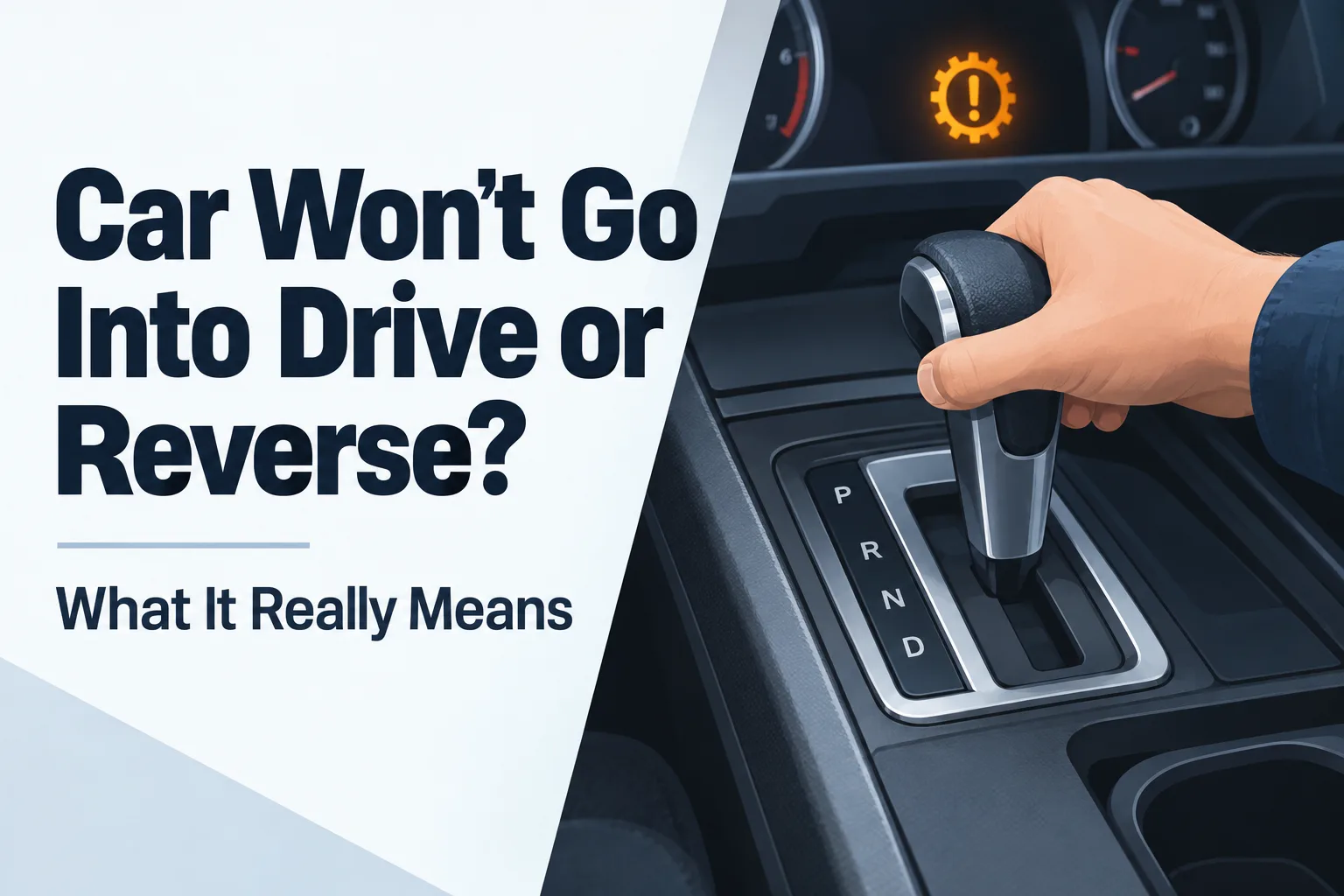
Car wont go into drive? Something between the shifter and the transmission has stopped talking, or the transmission can't engage the gear once it gets the signal. Sometimes that's as simple as low fluid or a stuck linkage. Sometimes it's internal wear that needs a real look under the car. Either way, something changed - and that's worth figuring out before you put more miles on it.
Sometimes it creeps up - a hesitation before the gear finally catches. Other times it's sudden: the shifter moves, nothing happens. Both versions have real, identifiable causes, and a shop with the right tools can usually sort out which one you're dealing with fast.
Key Takeaways
- A car that won't go into drive or reverse is often an electrical, linkage, or fluid problem before it's a rebuild problem.
- Don't force the shifter or rev the engine trying to “shock” it into gear, this can make a small problem worse.
- A proper transmission diagnostic can usually tell you within an hour whether it's a quick fix or something deeper.
- Delayed engagement that's getting worse over weeks is a warning sign, not something to wait out.
- If the transmission is stuck in one gear and won't move, have it towed rather than driven.
Table of Contents
What would cause my car to not shift gears?
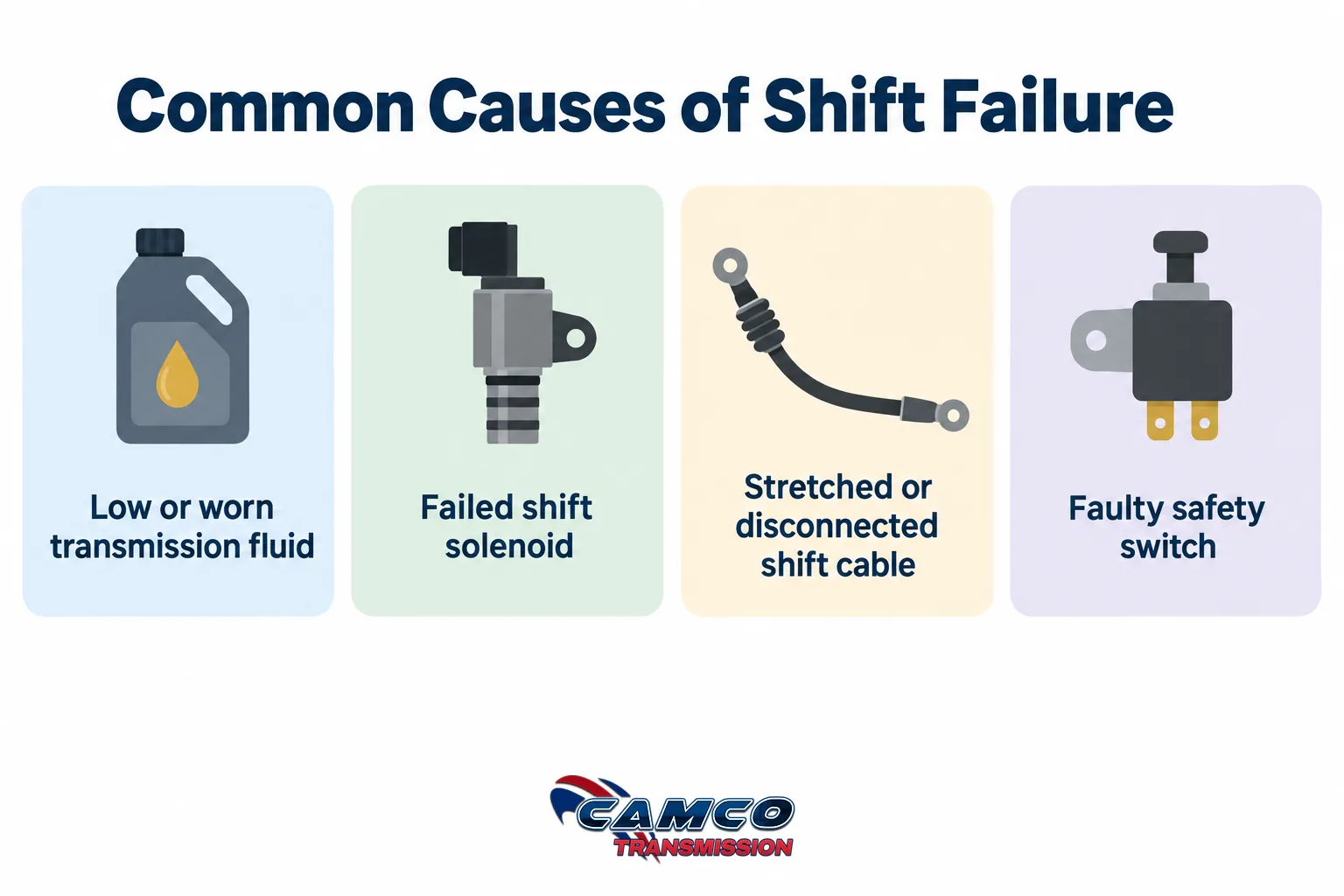
Most often it's low or worn-out transmission fluid, a failed shift solenoid, a stretched or disconnected shift cable, or a faulty safety switch. Automatic transmissions run on fluid pressure and electronic signals working together to move into each gear. Low, contaminated, or just wrong fluid, and the valve body can't build the pressure it needs for drive or reverse. A failed shift solenoid causes the same symptom a different way: the transmission control module simply can't open the right passage, even with good fluid.
Could low transmission fluid be the cause?
Yes - it's usually the first thing worth checking. Starve the pump of fluid and it can't build the pressure needed to fully engage drive or reverse, even though neutral still works fine. A leak is the usual culprit, and red fluid under the car is a sign worth tracking down before it gets worse.
Could it be the shift interlock or brake switch?
It can be. Most vehicles won't let the shifter leave park unless the brake pedal switch confirms the brake is pressed. Let that switch fail, and the shifter feels stuck even though the transmission itself is fine.
- Check the fluid level and color. Low or burnt-smelling fluid points toward a fluid problem rather than a mechanical one.
- Press firmly on the brake pedal while shifting. This rules out a simple brake-light switch issue in seconds.
- Note whether the dash shows a warning light. A check-engine or transmission warning light narrows down the cause considerably.
- Avoid repeated hard shifting. Forcing the shifter can damage the linkage or cable even if the original problem was minor.
How do I reset my transmission?
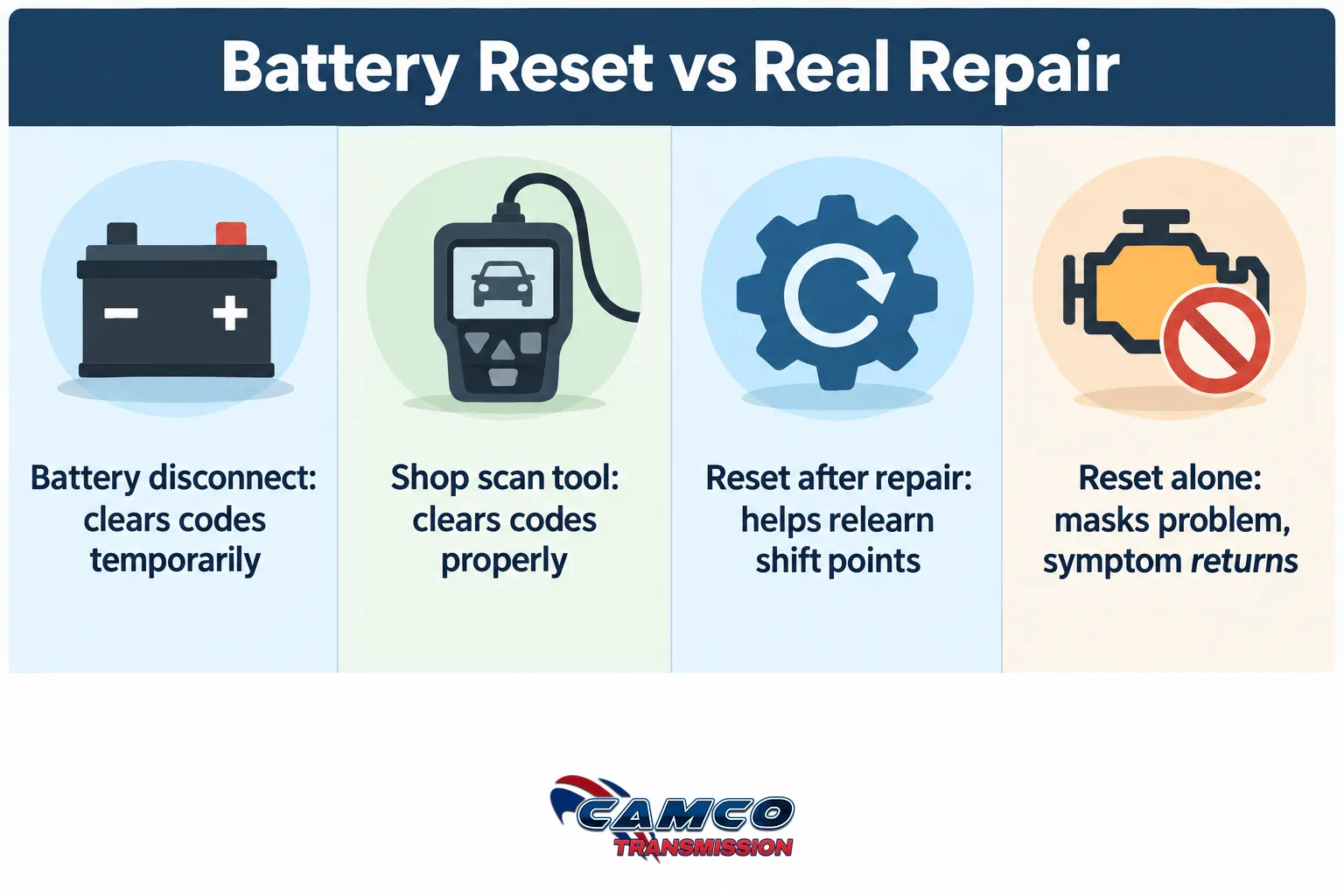
A “reset” usually means clearing the adaptive memory in the transmission control module, and it's a diagnostic step, not a repair. Pull the battery for a few minutes, or have a shop clear the codes with a scan tool, and the transmission re-learns its shift points. That can mask a minor glitch for a while. But if a failed sensor, low fluid, or worn internal parts caused it in the first place, the symptom comes right back.
Does disconnecting the battery fix it?
Sometimes, briefly. It clears the stored fault codes and forces the computer to relearn shift patterns from scratch, which can hide a minor glitch for a bit. It won't touch a mechanical cause like a worn solenoid or low fluid - so the problem comes back.
When does a reset actually help?
It helps most after a repair, say a solenoid swap or fluid service, so the computer can relearn correct shift behavior with the new parts in place. On its own, without fixing what caused the fault, it's a patch and nothing more.
Why is my car stuck in reverse and won't start?
This points to the neutral safety switch, which stops the engine from starting unless the transmission is in park or neutral. A failed or misadjusted switch can read the transmission as being in reverse even when the shifter sits somewhere else entirely - and the computer blocks the start as a safety measure.
What is the neutral safety switch?
It's a small switch, mounted on or near the transmission, that tells the starter the car is safely in park or neutral before letting it fire up. When it fails, it sends the wrong signal - sometimes blocking the start entirely, sometimes locking the shifter's apparent position. For a shop with the right equipment, it's a quick check.
Why does my automatic car take long to change gears?
A delay before the car shifts, especially into drive or reverse, almost always points to low fluid pressure, worn clutches, or a valve body starting to fail. A healthy transmission grabs the gear within a second or two. Stretch that to several seconds, and something inside is struggling to build or hold the pressure it needs.
Is delayed engagement serious?
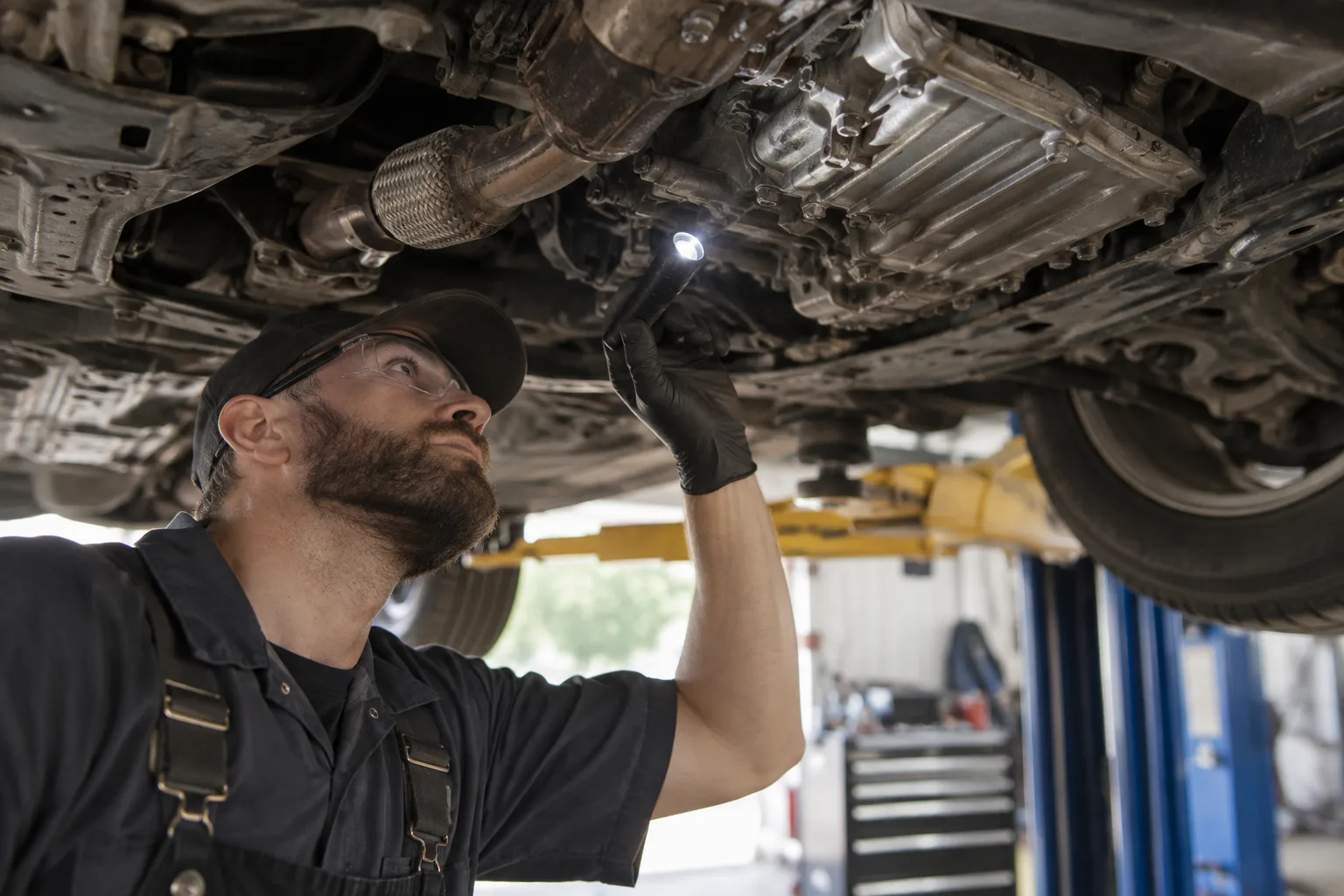
It can be - often the earliest sign of wear, long before a transmission quits altogether. Left alone, it tends to get worse, not better, and the parts picking up the slack wear out faster for it. A full look at what's behind delayed or rough shifting can show whether it's still a simple fix.
Get a Straight Answer on Your Shifting Problem
CAMCO Transmission has been sorting out shifting problems in Las Vegas for over 20 years, with BBB A+ accreditation and ATRA membership behind it. The shop sits just east of The Orleans Hotel & Casino on Wynn Road, and runs honest diagnostics on foreign and domestic vehicles alike - explained in plain terms before any work starts.
If a rebuild turns out to be the right call, it's backed by a 12,000-mile, 1-year warranty - with a 24,000-mile, 2-year upgrade available if you want the extra coverage.
Don't keep guessing - book a transmission diagnostic in Las Vegas and find out exactly what's keeping your car out of drive or reverse.
Frequently Asked Questions
Is it safe to drive if my car won't go into drive?
No. A transmission slipping in and out of gear, or hesitating badly, can mean sudden loss of power or more damage to internal parts. Get it looked at before putting more miles on it.
Can a low battery cause shifting problems?
Yes. On some vehicles, a weak battery causes voltage drops that confuse the transmission control module, leading to delayed or blocked shifts. Rule that out before assuming the transmission itself has failed.
Will a code reader show why my transmission won't engage?
Often, yes. Stored fault codes can point straight to a specific solenoid, sensor, or switch, which narrows things down fast. A basic code reader won't catch mechanical wear, though, so a full diagnostic is still the more reliable route.
Does this always mean I need a rebuild?
No. Plenty of cases trace back to low fluid, a bad switch, or a failed solenoid - all far less involved than a rebuild. A proper diagnosis is the only way to know which one you're dealing with.
What should I check before calling a shop?
Check the fluid level and color, confirm the brake pedal is fully pressed when you shift, and note any dashboard warning lights. Having that ready helps a shop narrow things down faster once you bring it in.
How much does it cost to diagnose a shifting problem in Las Vegas?
Costs vary by vehicle and by what the diagnostic turns up, so it's worth asking directly rather than guessing. Checking current transmission repair offers in Las Vegas before booking can also bring the total down.
More articles
- Signs of a Bad Transmission Solenoid
- Transmission Noise When Accelerating: Whining, Humming or Grinding
- Truck and Van Transmission Repair in Las Vegas
- Transmission Repair Near the Las Vegas Strip for Locals and Workers
- Torque Converter Problems: Signs, Causes and Repair Options
- Car Shifting Hard? What Hard Shifts Mean for Your Transmission