Signs of a Bad Transmission Solenoid
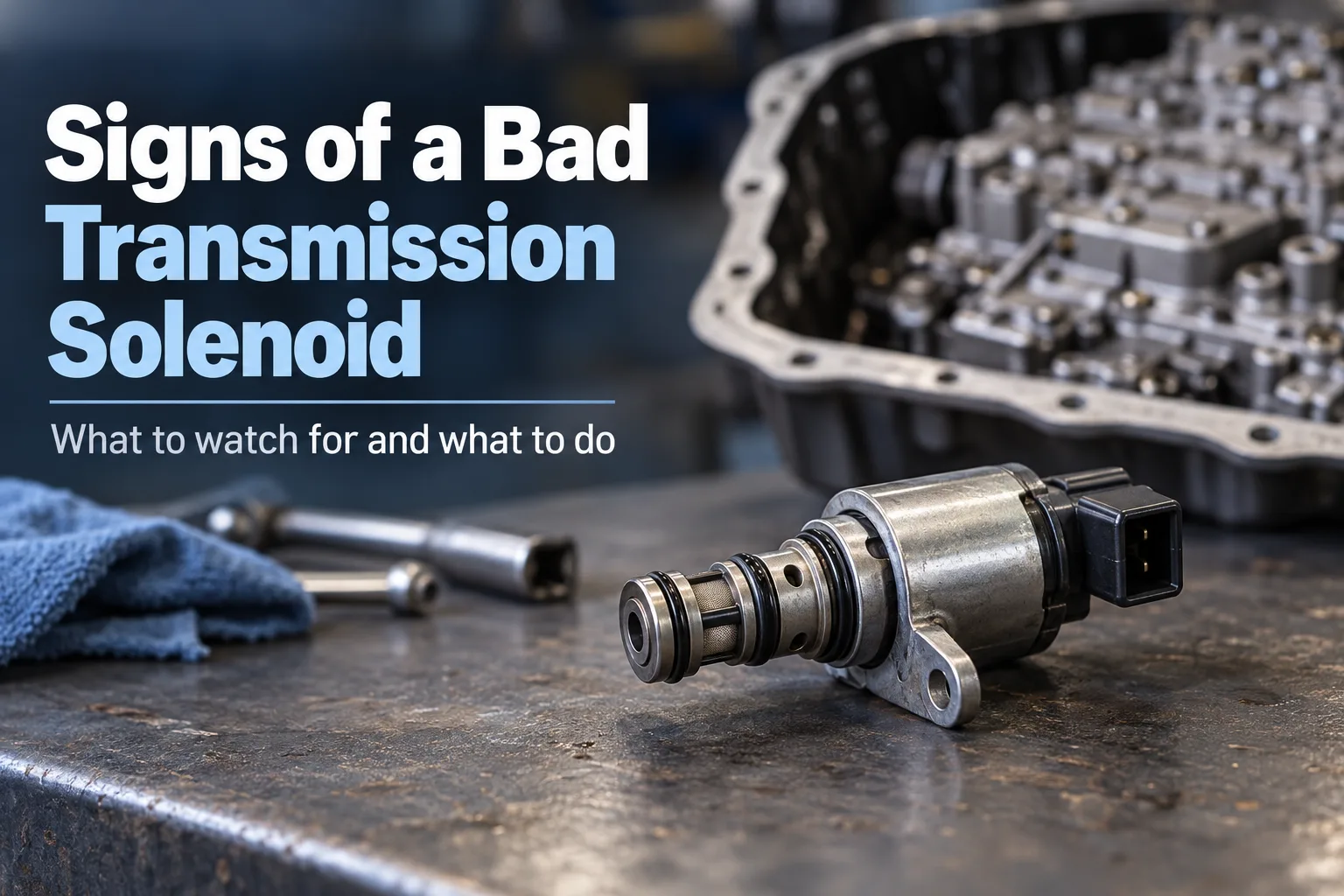
Harsh or late shifts, a car stuck in one gear, an engine that revs while the car barely keeps up: those are the classic bad transmission solenoid symptoms. A solenoid is a small electric valve that tells fluid where to go inside your transmission. When one stops responding, shifts stop happening on time.
These signs can also come from low fluid, worn internal parts or a wiring fault. A solenoid is a likely suspect, not a sure one. Below you will find what each sign means, whether it shows up as a code, how the part gets tested and what drives the repair cost.
Key Takeaways
- Shifts that are suddenly harsh, late or missing are the classic first sign of a failing solenoid.
- A solenoid problem often sets a check-engine light, but not always, so no light does not clear the transmission.
- Check your fluid level and condition first, because low or burnt fluid can mimic a bad solenoid.
- A code points to a circuit, not a part, so get it confirmed before you buy anything.
- If the car drops into limp mode or will not move, read what it means when a car won’t go into drive and stop driving it.
Table of Contents
What are the first signs of solenoid failure?
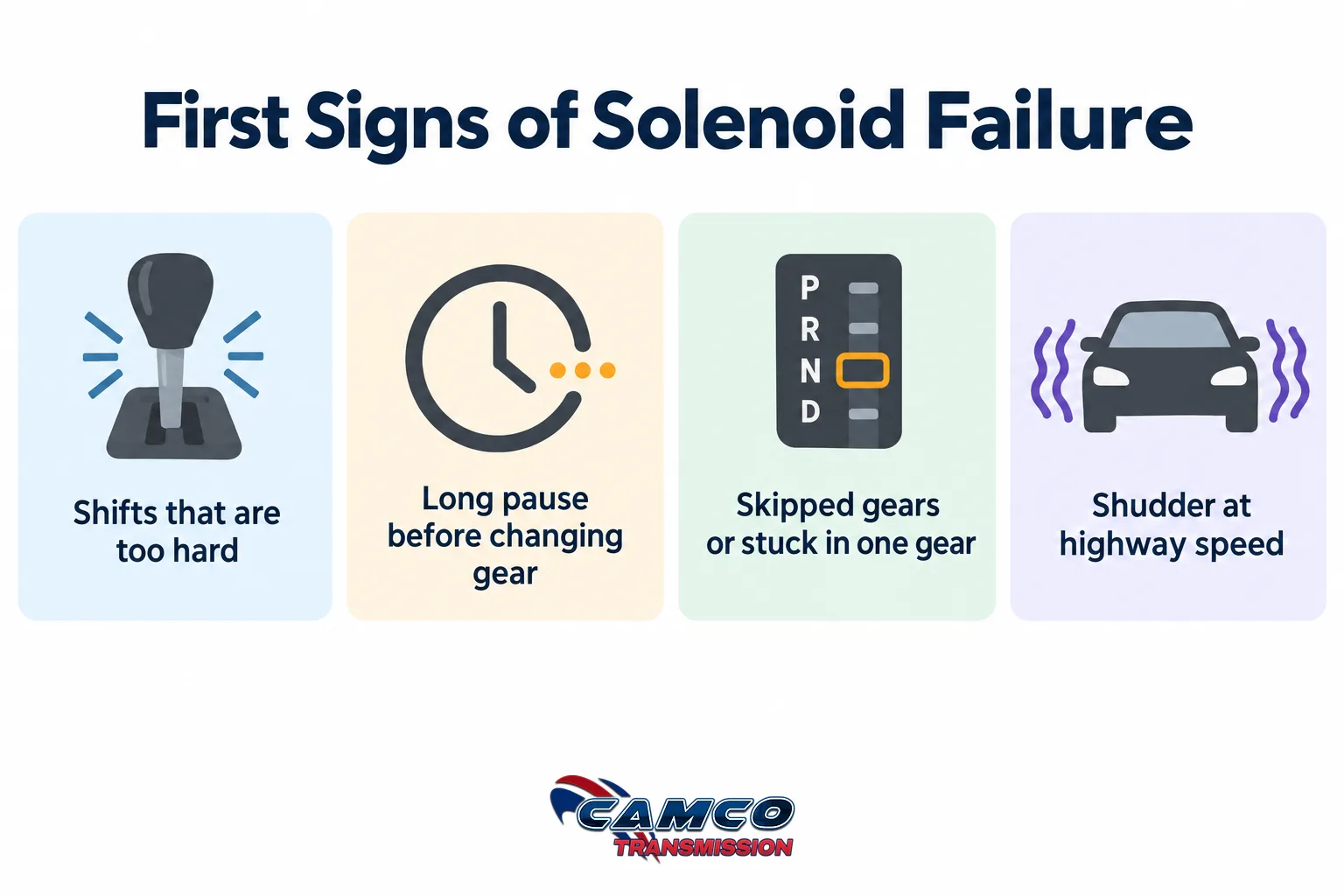
The first signs are shifts that feel wrong: too hard, too late, or not happening at all. Your car’s computer decides when to change gears and sends an electrical signal to the solenoids. They open and close fluid passages to make the shift happen. When one sticks or loses its signal, you feel it.
Which symptoms point to a shift solenoid?
Watch for a bang or jolt when the car shifts, a long pause before it changes gear, skipped gears, or a car that stays in one gear no matter how fast you go. Some cars drop into a protective “limp mode,” which locks the transmission into a single gear so you can get somewhere safe. Our guide on what hard shifts mean covers the wider list of causes.
Which symptoms point to a lockup or pressure solenoid?
Not every solenoid picks gears. One controls the torque converter clutch, which locks the engine to the transmission at cruising speed. If it fails, you may feel a shudder at highway speed or notice worse fuel economy. Another type controls fluid pressure. When that one fails, expect slipping, flaring revs or very firm shifts. If your engine revs up between gears, see what transmission slipping means.
Will a bad transmission solenoid throw a code?
Often yes, but not every time. The car’s computer watches the electrical side of each solenoid and compares what it commanded with what actually happened. If the two don’t match, it can store a trouble code and turn on a warning light.
What do the codes look like?
Transmission codes usually start with P07. Under the standard OBD-II code system, the P0750 to P0770 range covers shift solenoids A through E. Other codes in that family cover pressure and lockup solenoids. Your scan tool or a shop can read them. If a light is on, our post on the check-engine light and your transmission explains how the two connect.
Can a solenoid fail without any light?
Yes. Dirt or varnish in the fluid can make a solenoid stick open or closed, and the computer may see no electrical fault because the wiring is fine. You get bad shifts and no code. That is why a clean scan does not prove the transmission is healthy. For the light itself, see what to do when the transmission warning light comes on.
How to test if a transmission solenoid is bad?
Start with the fluid and a code scan, then have the solenoid and its circuit tested properly. You can’t judge a solenoid by feel alone, because other faults produce the same symptoms.
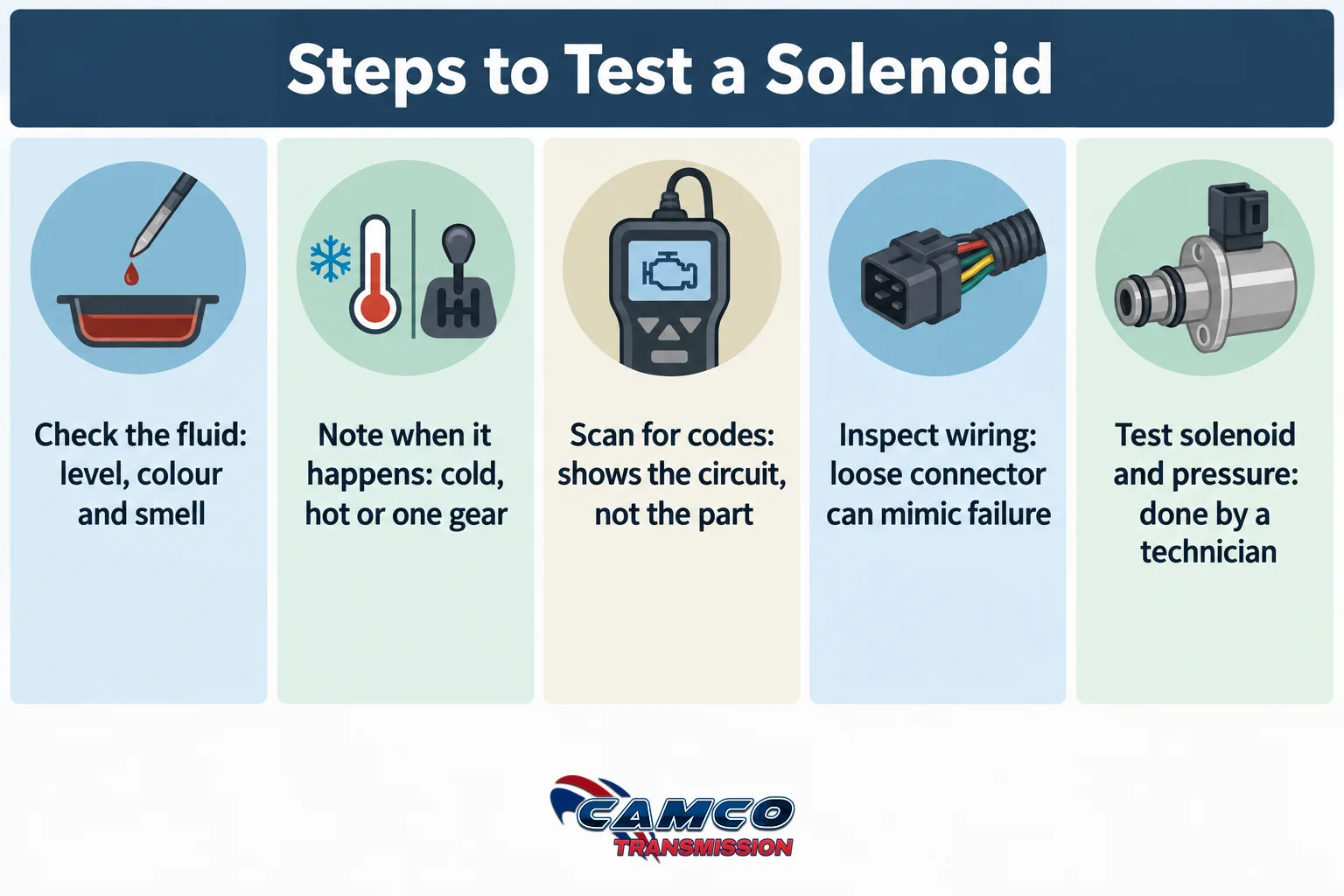
- Check the fluid. Look at level and colour if your car has a dipstick. Some newer cars have none, so check your owner’s manual. Low, dark or burnt-smelling fluid is a problem on its own and can cause shift trouble.
- Note when it happens. Write down whether the problem shows up cold or hot, in one particular gear, or at a certain speed. It helps the technician narrow things down.
- Scan for codes. A code tells you which circuit the computer is unhappy with. It does not tell you the part has failed.
- Inspect the wiring and connector. A damaged wire or loose connector can set the same code as a dead solenoid.
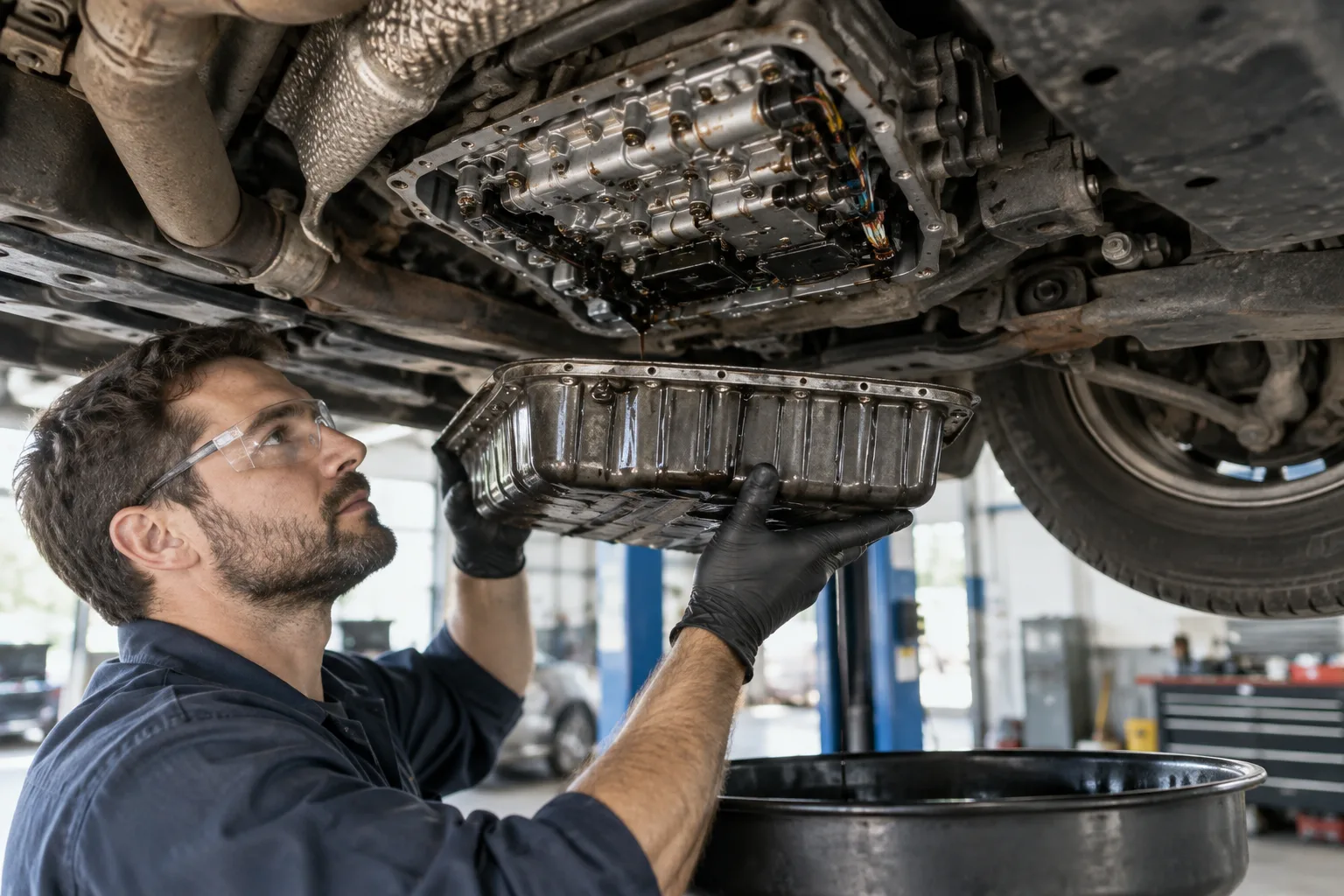
- Test the solenoid and fluid pressure. On many vehicles a technician has to remove the pan to reach the solenoids, check their electrical readings and look for debris. Pressure checks show whether the valves are moving fluid as they should.
Can I test it myself in the driveway?
You can handle the first three steps. After that, the work means draining fluid and getting inside the transmission, and one mistake can cause more damage. Las Vegas heat is hard on fluid, so if you also notice overheating, read about transmission overheating in Las Vegas heat.
Is a transmission solenoid expensive to fix?
It can be one of the more affordable transmission repairs, but only when the solenoid is the whole problem. The cost depends on which solenoid failed, where it sits, how much labor it takes to reach it, and the condition of the rest of the transmission.
What makes the bill go up?
On many vehicles the solenoids sit inside the transmission, so labor is a big part of the job, not just the part. Replacing a single solenoid is smaller than a rebuild. But if the solenoid failed because metal debris or burnt fluid has worn the valve body or clutches, a new one won’t last. Then the better fix may be a larger repair, and repair, rebuild or replace walks through that choice. For the top end of the range, see how much a transmission rebuild costs in Las Vegas.
Is it worth waiting to see if it gets better?
Usually not. A solenoid that shifts late or harshly puts extra wear on the clutches. One that sticks can leave you stuck in gear on a busy road. A diagnosis costs less than the damage that driving on it can cause.
Take the Next Step With Your Shifting Problem
If your car is shifting wrong, you don’t have to guess whether it is a solenoid, the fluid or something deeper. CAMCO Transmission in Las Vegas does transmission diagnostics and explains the result in plain English: what is wrong, why, and what your options are, with the cost laid out up front. We are BBB A+ accredited, ATRA members and have over 20 years of experience.
If the problem turns out to need a full rebuild, rebuilds come with a 12,000-mile/1-year warranty, and a 24,000-mile/2-year upgrade is available. You can also read about our transmission repair work before you call.
Get a straight answer on your symptoms with a transmission diagnostic in Las Vegas.
Frequently Asked Questions
What are the first signs of solenoid failure?
Most drivers notice shifts that are harsh, delayed or skipped. Others notice the car stuck in one gear, a shudder at highway speed or an engine that revs without the car speeding up. Any of these deserves a diagnosis, because other transmission problems feel the same.
Will a bad transmission solenoid throw a code?
Often it will, and the code usually starts with P07. Shift solenoids fall in the P0750 to P0770 range under the OBD-II system. A solenoid can also stick mechanically with no electrical fault, so you can have symptoms and no light.
How to test if a transmission solenoid is bad?
Check the fluid, scan for codes and inspect the wiring first. Then a technician tests the solenoid’s electrical readings and the fluid pressure, often after removing the pan. A code alone does not prove the solenoid is the part that failed.
Is a transmission solenoid expensive to fix?
It depends on which solenoid it is and how hard it is to reach. Labor is often a large part of the bill. If the transmission has other wear, replacing only the solenoid may not fix the problem for long.
Can I keep driving with a bad solenoid?
For a short while you might, but it is a gamble. Harsh or slipping shifts wear internal parts faster, and a stuck solenoid can leave you in the wrong gear. If the car goes into limp mode, get it checked soon.
Can low fluid act like a bad solenoid?
Yes. Low or burnt fluid can cause late shifts, slipping and harsh engagement, just like a failing solenoid. Check the fluid first, before anyone replaces a part.
More articles
- Transmission Noise When Accelerating: Whining, Humming or Grinding
- Truck and Van Transmission Repair in Las Vegas
- Transmission Repair Near the Las Vegas Strip for Locals and Workers
- Torque Converter Problems: Signs, Causes and Repair Options
- Car Shifting Hard? What Hard Shifts Mean for Your Transmission
- Transmission Shop Near The Orleans Hotel & Casino