Car Shifting Hard? What Hard Shifts Mean for Your Transmission
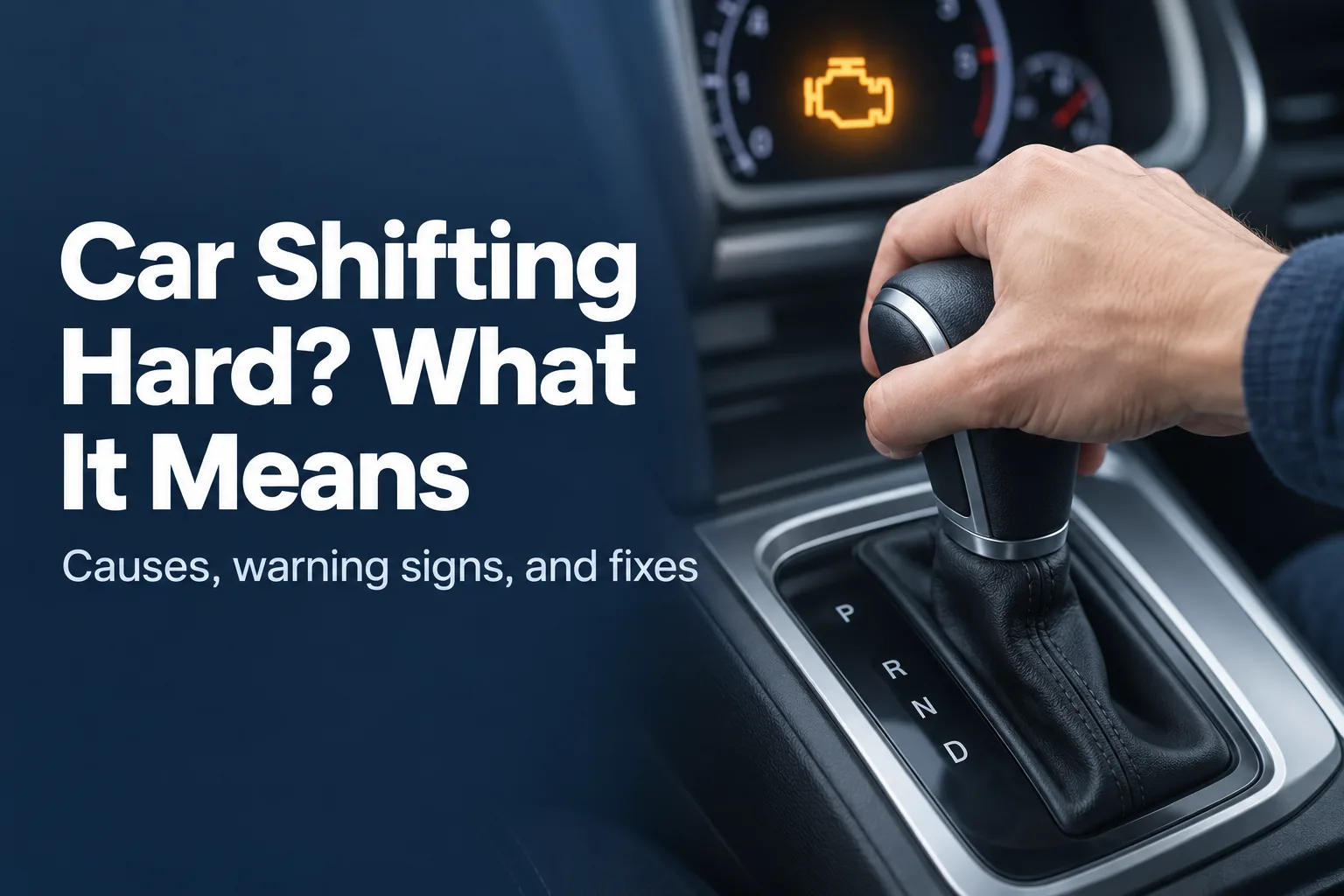
Car shifting hard means the transmission is struggling to move between gears smoothly — usually because of low or worn fluid, a failing sensor, or worn internal parts. It can feel like a jolt, a bang, or a pause before the gear finally catches. Some causes are cheap, five-minute fixes. Others point to wear that needs a real look before it gets worse.
Either way, don't ignore it. A hard shift is one of the more noticeable ways a transmission tells you something's wrong, and catching it early usually means a smaller repair bill than waiting it out.
Here's what causes it, the warning signs that tend to show up alongside it, and what actually fixing it involves.
Key Takeaways
- Hard shifting is often caused by low or degraded transmission fluid, a failing solenoid, or a worn sensor.
- A hard shift that shows up alongside slipping, delayed engagement, or warning lights usually means the problem is getting worse, not staying the same.
- A proper transmission diagnostic identifies the exact cause before any repair is recommended.
- Fixes range from a fluid service to a full rebuild, depending on what the diagnostic finds.
- Driving on a hard-shifting transmission for weeks or months tends to turn a minor fix into a major one.
Table of Contents
Why is my car gear shifting hard?
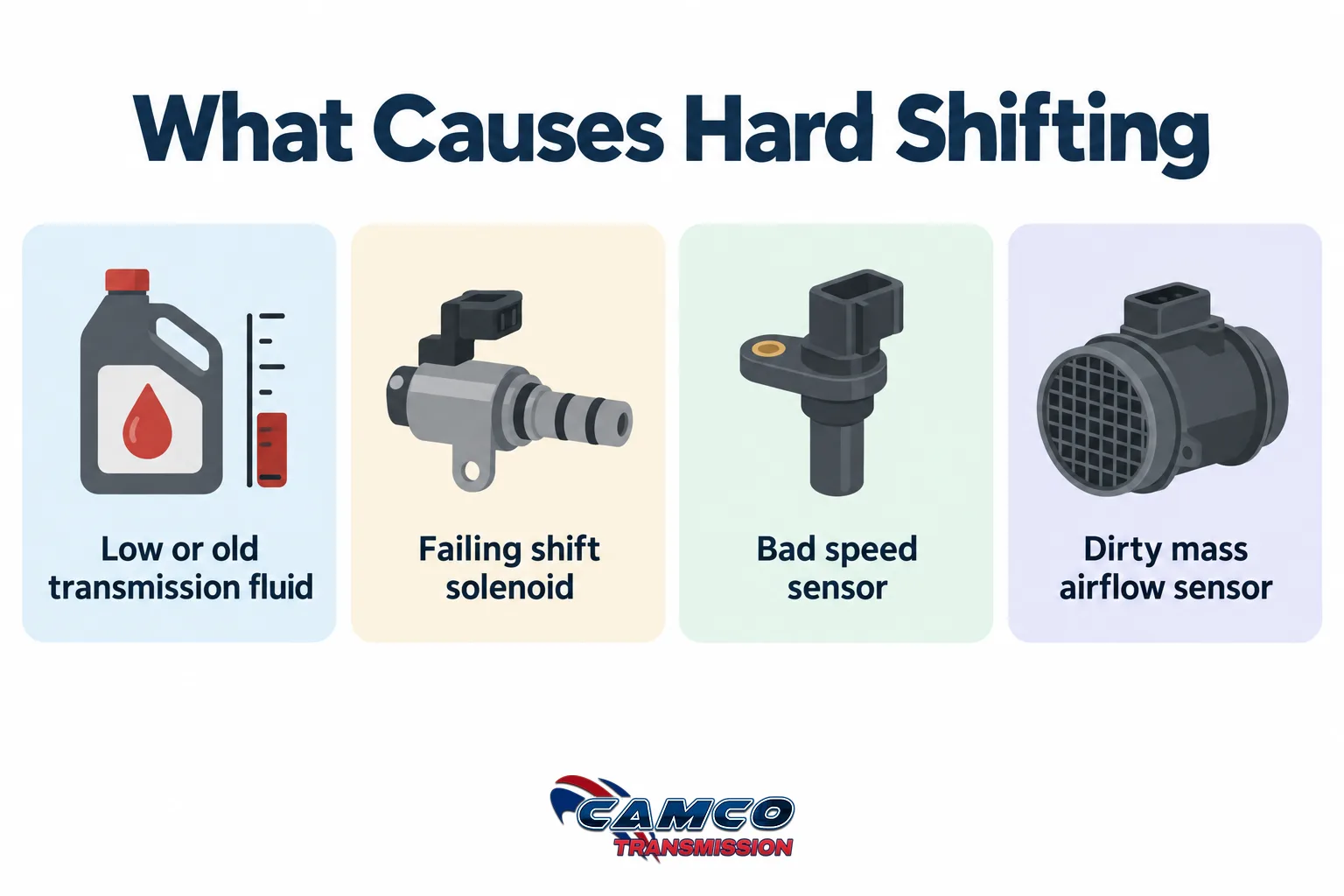
Hard shifts usually trace back to one thing: the transmission isn't getting the right fluid pressure or the right electronic signal at the right moment. The transmission leans on fluid pressure and a handful of sensors and solenoids to know exactly when to change gears. Low, old, or burnt fluid can't build the pressure needed for a smooth shift, so the change happens late and hard instead of early and soft. A failing shift solenoid or a bad speed sensor can send the wrong signal entirely, causing the transmission to hold a gear too long or slam into the next one.
Is hard shifting always a transmission problem?
Not always. A dirty mass airflow sensor, worn engine mounts, or a transmission control module that needs a software update can all cause a shift that feels hard even though the transmission itself is healthy. That's exactly why a proper diagnostic matters before any parts get replaced.
Does hard shifting happen more in Las Vegas heat?
Heat speeds up fluid breakdown, and degraded fluid is one of the most common reasons shifts get rough. Summer pavement here pushes transmission fluid harder than it would in a milder climate, so fluid condition is worth checking sooner rather than later.
What are the first signs of transmission failure?
Hard shifting is often one of the earliest signs, usually showing up alongside delayed engagement, slipping, or a shudder when accelerating. On its own, a single hard shift might mean nothing more than fluid that's due for a change. But when it starts happening at the same gear every time, or shows up with other symptoms, it's a sign the transmission is already working harder than it should.
Is hard shifting itself an early warning sign?
Yes. It's one of the clearer signals a transmission gives before bigger problems appear, because it means the system is already compensating for something, whether that's low pressure, a dying sensor, or wear inside the gear sets.
What should I check first?
Fluid level and condition come first, since they're the most common and least expensive cause. Dark, burnt-smelling, or low fluid is often the whole story. If the fluid looks fine and the hard shifting keeps up, it's worth reading up on what transmission slipping means, since the two symptoms often travel together.
Can hard shifting be fixed?
Yes, in most cases hard shifting can be corrected once the actual cause is identified. The fix depends entirely on what's behind it. A fluid change solves it when the fluid is simply old or low. A solenoid or sensor replacement solves it when the electronics are sending the wrong signal. Worn clutches or gear wear inside the transmission need a rebuild. Here's the general order of steps a shop works through:
- Check fluid level and condition. Low or burnt fluid is ruled in or out first, since it's the simplest and most common cause.
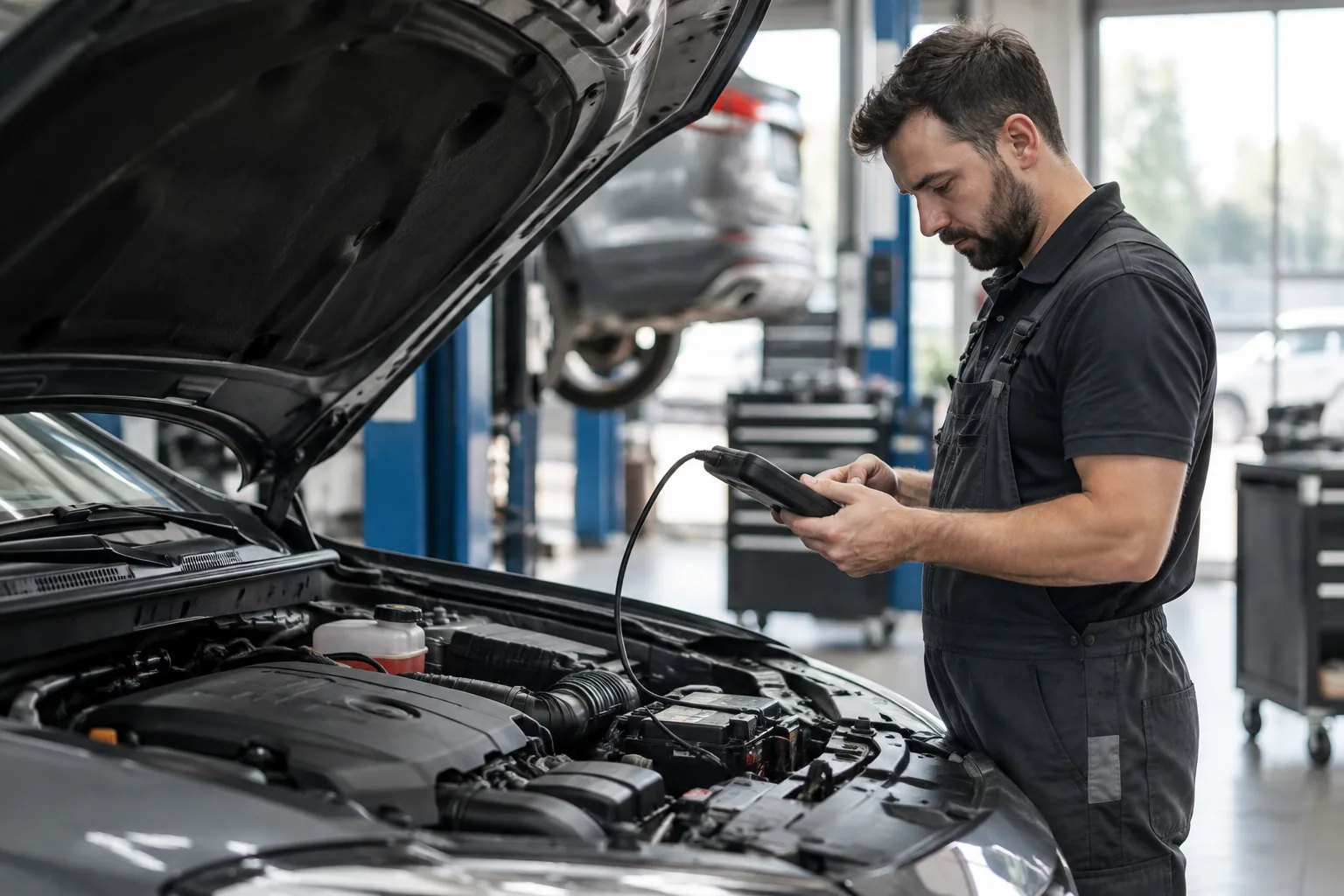
- Pull diagnostic codes. A scan tool reads any stored codes related to shift solenoids, sensors, or the transmission control module.
- Road test and pressure-test. This confirms exactly which gear or shift point is affected and whether pressure is building correctly.
- Inspect internal wear if needed. If fluid and electronics check out fine, the transmission may need to be opened up to look at clutches, bands, and gear sets.
- Repair based on findings. The fix might be a fluid service, a solenoid replacement, or a full rebuild, depending on what the earlier steps turn up.
Skip that process and guess, and you're usually paying for parts that were never the problem.
How much does it cost to fix a hard-shifting transmission?
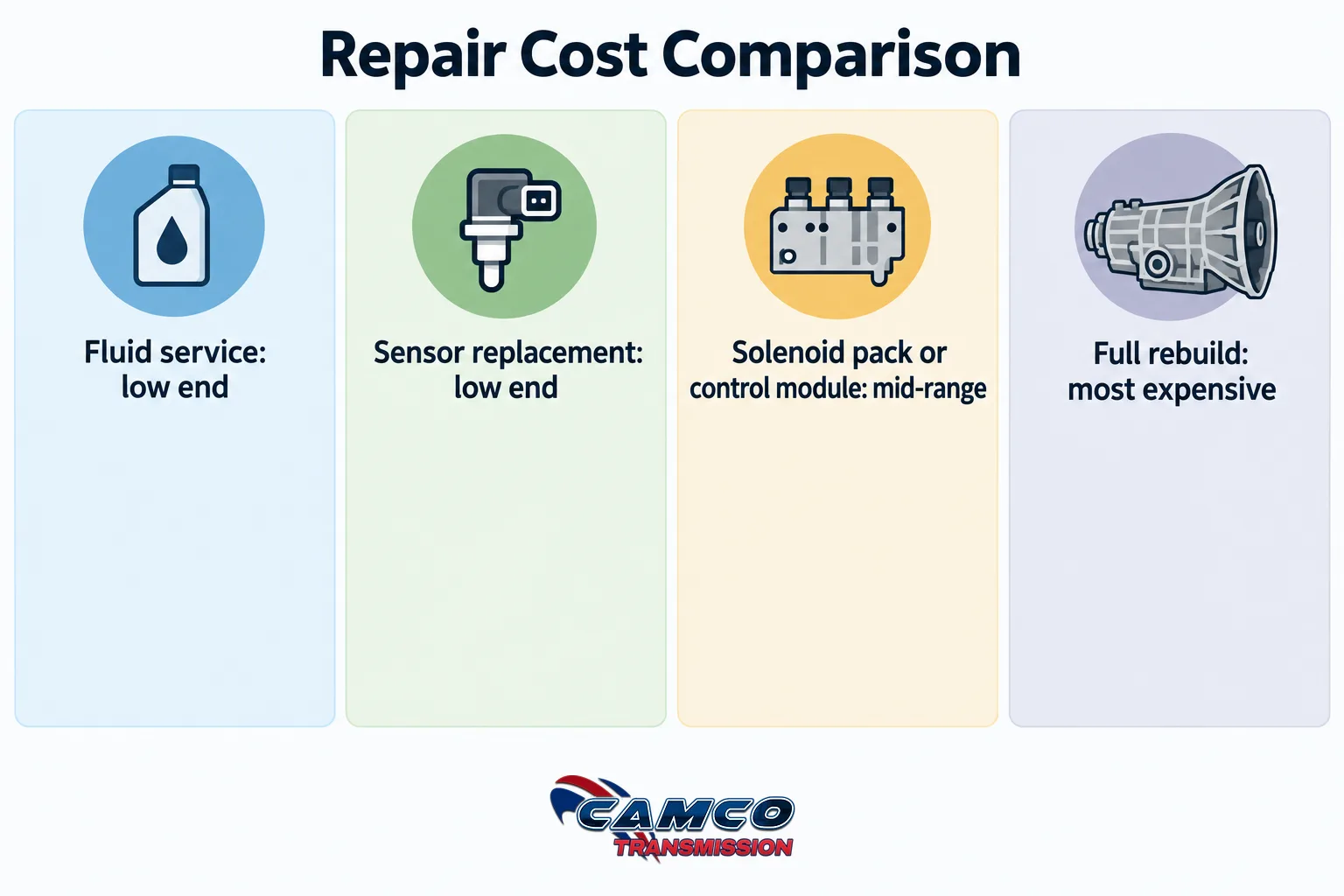
Cost depends entirely on the cause, and it can range from the price of a fluid service up to a full rebuild. A fluid change or sensor replacement sits at the low end. A solenoid pack or control module issue costs more, but it's still a targeted repair. A rebuild — needed when internal parts are worn — is the most involved and most expensive option. The only way to know which one applies is a diagnostic that checks fluid, codes, and pressure before quoting a repair.
For a breakdown of what drives rebuild pricing specifically, this guide to transmission rebuild costs in Las Vegas walks through the factors that affect the final number.
Get a Clear Diagnosis Before It Gets Worse
CAMCO Transmission runs honest diagnostics on foreign and domestic vehicles, explained in plain English before any work starts. The shop carries BBB A+ accreditation and ATRA membership, built on more than 20 years working on transmissions in Las Vegas. Full rebuilds come with a 12,000-mile/1-year warranty, and a 24,000-mile/2-year upgrade is available for drivers who want extra coverage.
If a hard shift has shown up more than once, get an answer instead of guessing. Spanish-speaking service is available for customers who need it.
Start with a transmission diagnostic to find out exactly what's causing the hard shift.
Frequently Asked Questions
Is it safe to keep driving with a hard-shifting transmission?
Short trips at low speed usually aren't an emergency, but hard shifting rarely improves on its own. Keep driving on it, and you tend to add wear to clutches and gears that weren't the original problem, turning a smaller fix into a bigger one.
Does hard shifting mean I need a new transmission?
Not necessarily. Many cases trace back to fluid, a sensor, or a solenoid, all of which are far less involved than replacing a transmission. A rebuild, which reuses the transmission's housing and replaces only the worn internal parts, is often the more realistic option when wear is the cause.
Can a transmission fluid change fix hard shifting?
Yes, if low or degraded fluid is the cause. If fluid is already in bad shape, a flush instead of a simple change may be the better call, and this comparison of fluid changes versus flushes explains the difference.
How do I know if the problem is the transmission or something else?
A diagnostic scan and road test show whether stored codes point to the transmission or to something like engine mounts or a sensor elsewhere in the drivetrain. Guessing by feel alone is unreliable, since several unrelated issues can produce a similar jolt.
Does hard shifting happen only at certain speeds?
It can show up at one specific gear change, often between first and second or second and third, or it can happen across the board. Where it happens is a useful clue during diagnosis, since specific gear patterns often point to a particular solenoid or clutch pack.
What happens if hard shifting is left unrepaired?
The parts compensating for the original problem keep wearing faster than normal, which can turn a solenoid or fluid issue into one that requires a rebuild. Catch it early, and it's almost always the cheaper fix.
More articles
- Signs of a Bad Transmission Solenoid
- Transmission Noise When Accelerating: Whining, Humming or Grinding
- Truck and Van Transmission Repair in Las Vegas
- Transmission Repair Near the Las Vegas Strip for Locals and Workers
- Torque Converter Problems: Signs, Causes and Repair Options
- Transmission Shop Near The Orleans Hotel & Casino