Truck and Van Transmission Repair in Las Vegas
If you need truck transmission repair in Las Vegas, start with the symptom, not the price. A truck or van that slips, shudders or won't engage a gear needs a proper diagnosis before anyone decides on a repair, a rebuild or a replacement.
Work vehicles get the hardest use a transmission can see: heavy loads, long idle stretches, stop-and-go traffic and summer heat. When yours acts up, it costs you income too. You want plain answers, and fast.
Here's why trucks and vans wear differently, what to watch for, and how to weigh your options without getting pushed into something you don't need.
Key Takeaways
- Heavy loads and towing make heat, and heat is the biggest enemy of transmission fluid and internal parts.
- Slipping under load, delayed engagement, shuddering and burning smells are reasons to stop hauling and get it checked.
- Ask for a diagnosis in plain English before approving any repair, and compare repair against rebuild using this repair, rebuild or replace guide.
- Fix small problems early; driving a slipping transmission loaded can turn a modest repair into a full rebuild.
- If you manage several vehicles, set up a maintenance routine instead of waiting for breakdowns.
Table of Contents
Why do trucks and vans wear out transmissions faster?
Because they carry and pull more weight than the transmission was often sized for day to day, and that extra work turns into heat. Inside an automatic transmission, fluid does three jobs. It cools, it lubricates, and it carries the hydraulic pressure that shifts gears. Hot fluid thins out and breaks down. Then it stops protecting the clutches and bands inside.
How does towing and hauling affect the transmission?
Every pound you add makes the transmission work harder, especially from a stop. That effort makes heat in the torque converter, the fluid coupling that connects the engine to the transmission. Many trucks have a tow or haul mode that changes shift behavior to cut down strain. Your owner's manual explains what it does on your vehicle. Using it as intended helps.
Does Las Vegas heat make it worse?
Yes. Summer air, hot asphalt and long idling in traffic leave the transmission less able to shed heat. Delivery vans that stop and start all day are a good example. Our post on transmission overheating in Las Vegas heat goes deeper on causes and fixes.
What are the warning signs of a failing truck or van transmission?
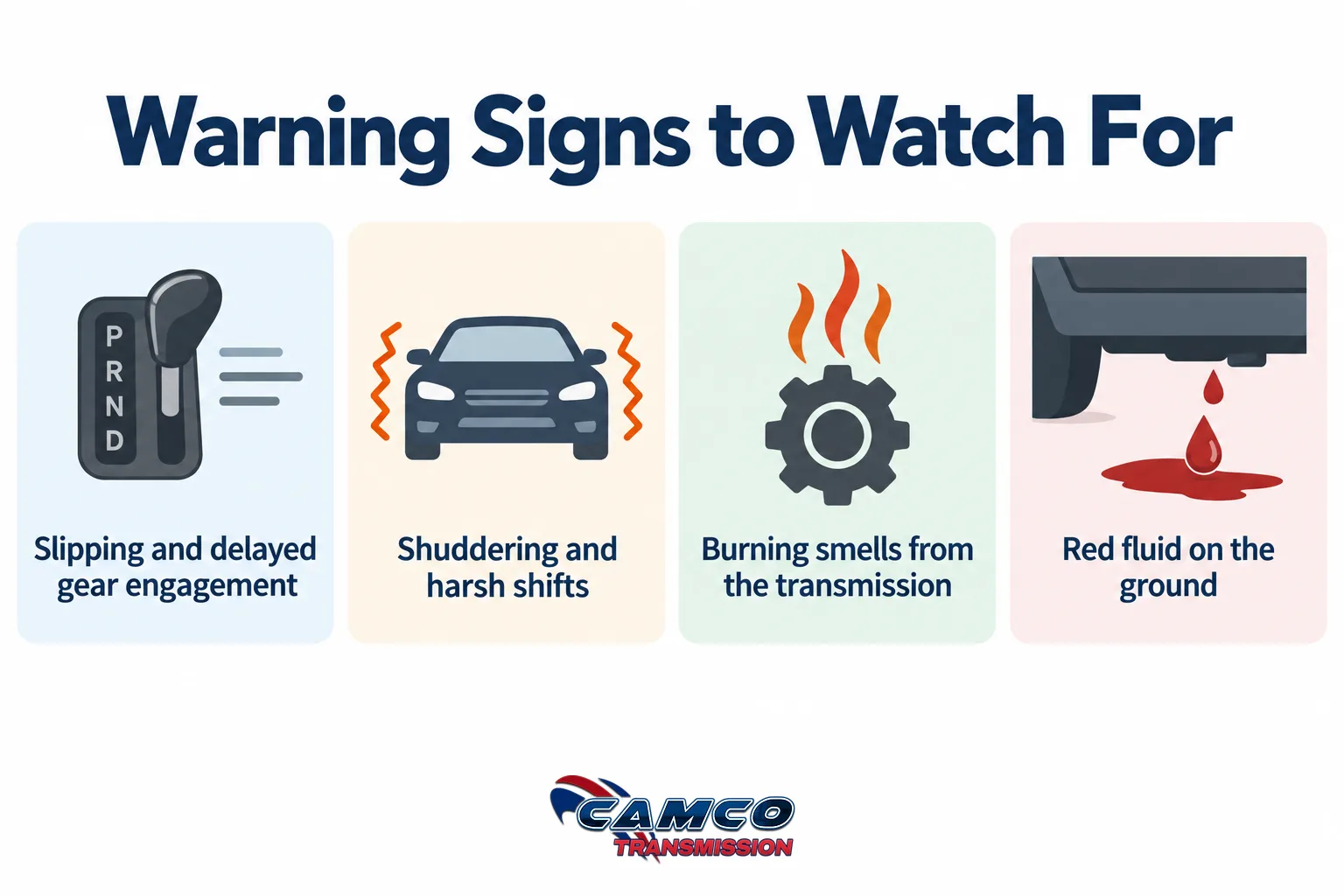
The most common signs are slipping, delayed gear engagement, shuddering, harsh shifts, burning smells and red fluid on the ground. None of these fix themselves. Most get worse with load, which is why a truck may feel fine empty and then fail the moment you hitch a trailer or fill the bed.
What does slipping feel like in a truck or van?
The engine revs, but the vehicle doesn't speed up to match. Or it feels like the gear let go for a moment. You'll often notice it most on a grade or when pulling away with weight on board. Read what transmission slipping means for the causes behind it.
Is a shudder always the transmission?
No. A shudder at steady highway speed can come from the torque converter, but worn engine parts, tires or driveline parts can feel much the same. That's why a real diagnosis matters. Guess wrong and you pay to replace a part that was never the problem.
What about the fluid?
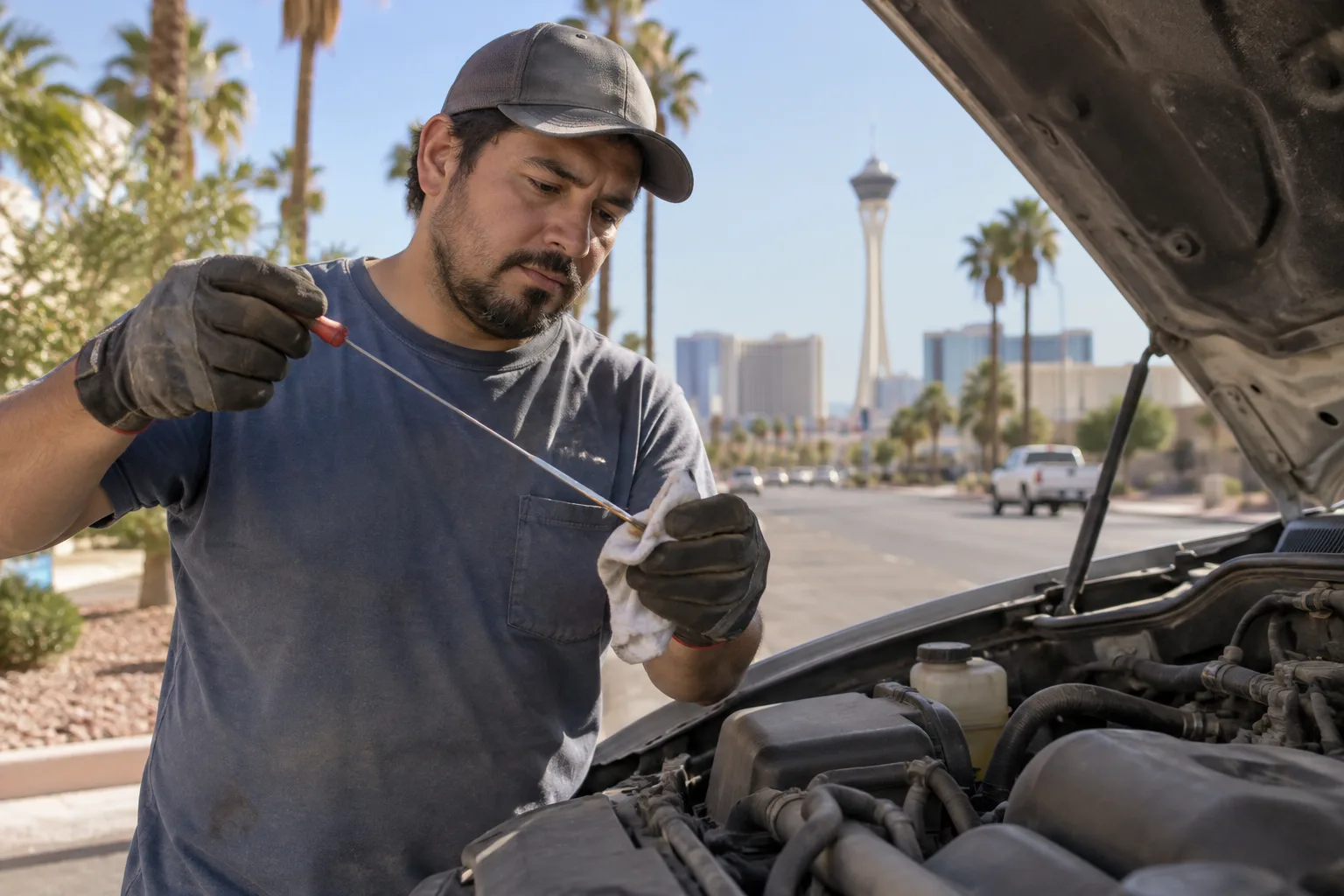
Transmission fluid is usually red or pink and fairly clear. Dark fluid, a burnt smell or metal glitter on the dipstick points to internal wear. If your vehicle has no dipstick, a sealed unit needs checking by a shop. A puddle of red fluid under your parking spot is a leak that needs attention, as explained in red fluid under your car.
What should you do the moment a work vehicle starts acting up?
Reduce the load, stop the heavy work and get it diagnosed before the damage spreads. Every extra mile on a slipping transmission grinds clutch material into the fluid, and that debris wears down the rest of the unit.
- Take the weight off. Unhitch the trailer or unload the bed if you can do it safely, and skip the hauling until it's checked.
- Note exactly when it happens. Write down whether it occurs cold or hot, loaded or empty, and in which gear.
- Check for leaks and fluid condition. Look under the vehicle. If it has a dipstick, check color and smell with the engine at the temperature your manual specifies.
- Don't clear codes and keep driving. A warning light is information. Here is what to do with a transmission warning light.
- Get a written diagnosis. Ask what failed, why it failed and what each option costs before you approve work.
Should you repair, rebuild or replace a truck or van transmission?
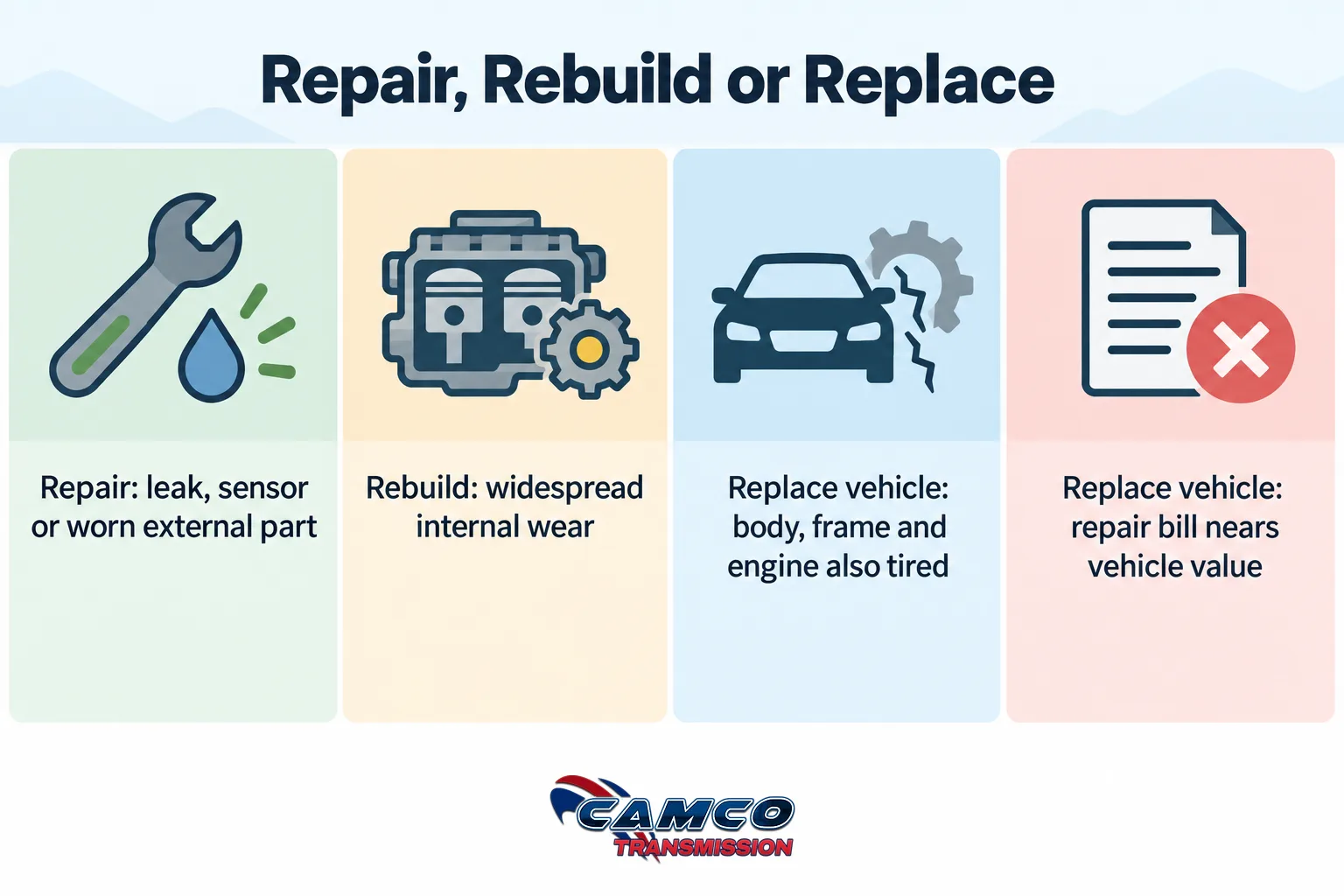
It depends on what failed, how far the damage has spread and how long you plan to keep the vehicle. A leak, a faulty sensor or a worn external part is a repair. Widespread internal wear usually points to a rebuild.
When does a rebuild make sense?
A rebuild takes the transmission apart, inspects every part, replaces what is worn and puts it back together. If you plan to keep a work vehicle on the road, that can make better sense than selling a truck you've paid off and know well. Look at how much a transmission rebuild costs in Las Vegas to see what shapes the price. Always ask what warranty comes with the work and what it covers.
When is replacing the vehicle the better call?
If the body, frame and engine are tired too, or the repair bill nears what the vehicle is worth, it's fair to think about replacing it. A good shop will lay out the numbers and won't steer you either way.
What if you run several vehicles?
Downtime multiplies with each van. A written maintenance routine and a shop that understands fleet service help you catch fluid problems early. Then you can plan repairs around your schedule instead of reacting to breakdowns.
Take the Next Step With Your Truck or Van
CAMCO Transmission is a Las Vegas shop with more than 20 years of experience, BBB A+ accreditation and ATRA membership. It handles transmission repair and rebuilds for foreign and domestic vehicles, and it also offers fleet service. Diagnosis comes first, explained in plain English, so you know what is wrong and why before you decide anything.
Full rebuilds carry a 12,000-mile or 1-year warranty, and a 24,000-mile or 2-year upgrade is available. If you drive for work, ask how the warranty applies to your use and your specific truck or van. Our transmission diagnostics page explains what a diagnosis involves.
When you're ready, see our transmission repair service in Las Vegas.
Frequently Asked Questions
How do I know if my truck's transmission is going bad?
Look for slipping, delayed engagement when you shift into drive or reverse, shuddering, harsh shifts, a burning smell or red fluid under the vehicle. These often show up first under load, such as towing or climbing a grade. A diagnosis confirms whether it's the transmission or another part.
Can I keep driving a van that slips occasionally?
It's risky. Slipping wears clutch material off internal parts and sends debris through the fluid, which can turn a smaller repair into a rebuild. If you must move the vehicle, keep the load light and drive straight to a shop.
Does towing really shorten transmission life?
Towing and hauling add heat, and heat degrades fluid and wears internal parts. Using your truck's tow or haul mode as the manual describes helps, and so does keeping the fluid in good condition. For work vehicles, the maintenance schedule in your owner's manual matters even more.
Is a rebuild better than a replacement transmission?
It depends on the vehicle and the damage. A rebuild repairs your own unit and replaces the worn parts, while replacement swaps in a different unit. Ask for both options in writing, including the warranty terms, then compare.
Do you work on fleet vehicles in Las Vegas?
Yes. CAMCO Transmission offers repair and maintenance services for fleet vehicles. The fleet page shows how it works when you're running more than one vehicle.
More articles
- Signs of a Bad Transmission Solenoid
- Transmission Noise When Accelerating: Whining, Humming or Grinding
- Transmission Repair Near the Las Vegas Strip for Locals and Workers
- Torque Converter Problems: Signs, Causes and Repair Options
- Car Shifting Hard? What Hard Shifts Mean for Your Transmission
- Transmission Shop Near The Orleans Hotel & Casino