Transmission Noise When Accelerating: Whining, Humming or Grinding

Transmission noise when accelerating usually means something inside the transmission is worn, low on fluid or running too hot. Whine, hum and grind each point toward a different part, so the exact sound tells you something.
A new noise from a car you count on every day is unsettling. It isn't automatically a death sentence for the transmission. But it deserves a look soon, because small problems are usually easier to deal with than big ones.
Below: what each sound tends to mean, how to tell it from other noises, and what to do before you spend any money.
Key Takeaways
- Note when the noise happens (speed, gear, cold or warm) before you call anyone, because those details guide the diagnosis.
- A whine that rises with speed often points to low or worn fluid, a struggling pump or a torque converter problem.
- Grinding, or a noise paired with slipping or delayed shifts, means stop heavy driving and get a transmission diagnosis.
- Check the fluid level and look under the car for red or brown drips, but do not rely on an additive to fix a noise.
- Other parts, such as wheel bearings, belts and axles, can sound like a transmission, so confirm the source first.
Table of Contents
What does a bad transmission sound like when accelerating?
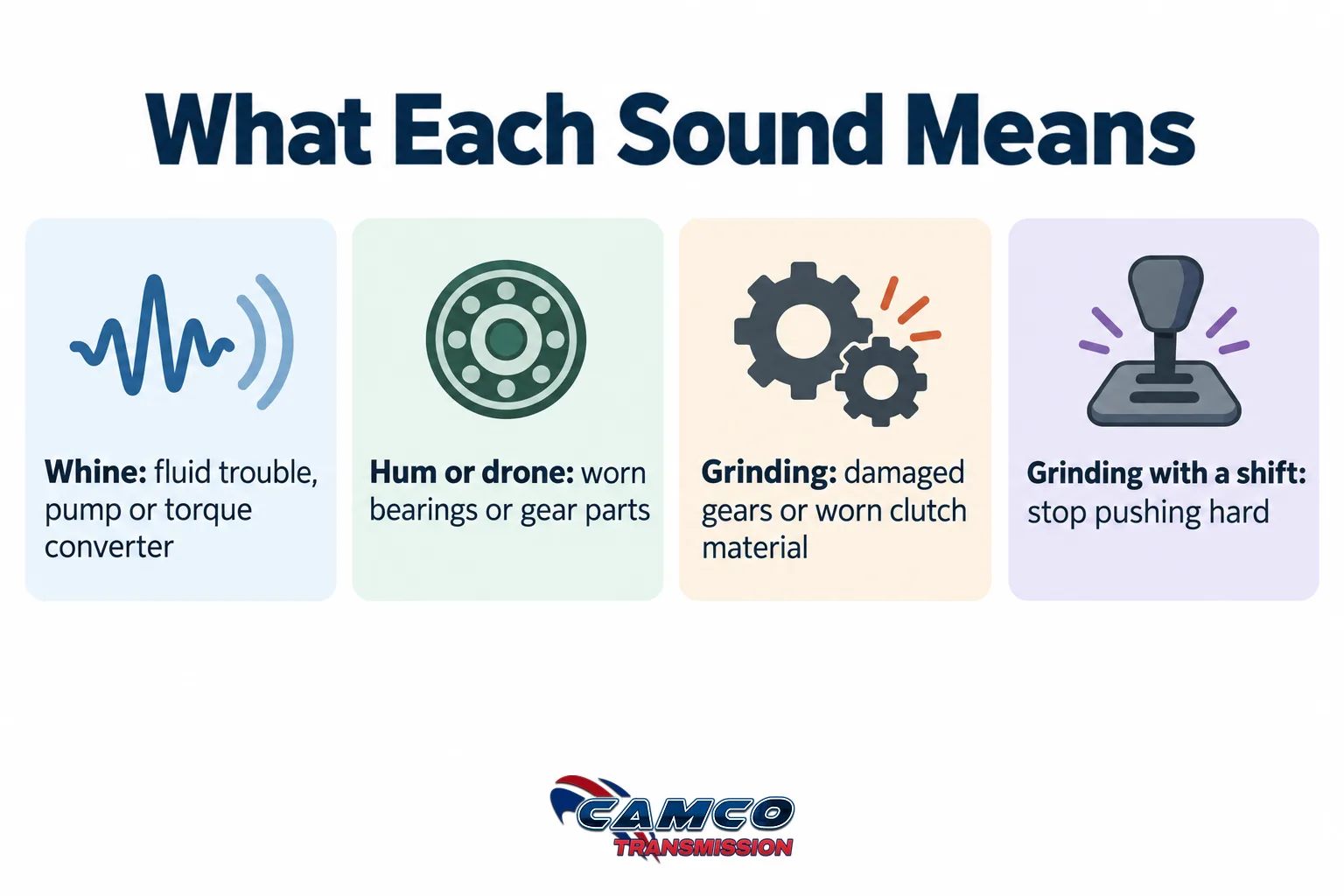
Most often it is a whine that climbs with speed, a hum or drone under load, or a grinding or buzzing as the car shifts. Each sound comes from a different kind of wear. That's why describing it carefully helps.
What does a whining sound mean?
A whine usually points to fluid trouble. The transmission pump moves fluid to cool, lubricate and apply pressure. If the fluid is low, burnt or full of air, the pump has to work harder, and it whines. A worn pump or a failing torque converter can make a similar sound.
What do humming and grinding mean?
A hum or drone under load can come from worn bearings or gear parts that no longer spin smoothly. Grinding is more serious. It can mean damaged gears, worn clutch material or metal rubbing on metal where fluid should be protecting it. If the grinding shows up with a shift, stop pushing the car hard.
What kind of noise does a failing transmission make?
A failing transmission can whine, hum, buzz, clunk or grind, and the noise often arrives with a change in how the car shifts. The sound alone rarely tells the whole story, so pay attention to what the car does at the same moment.
How do I tell it from an engine or wheel noise?
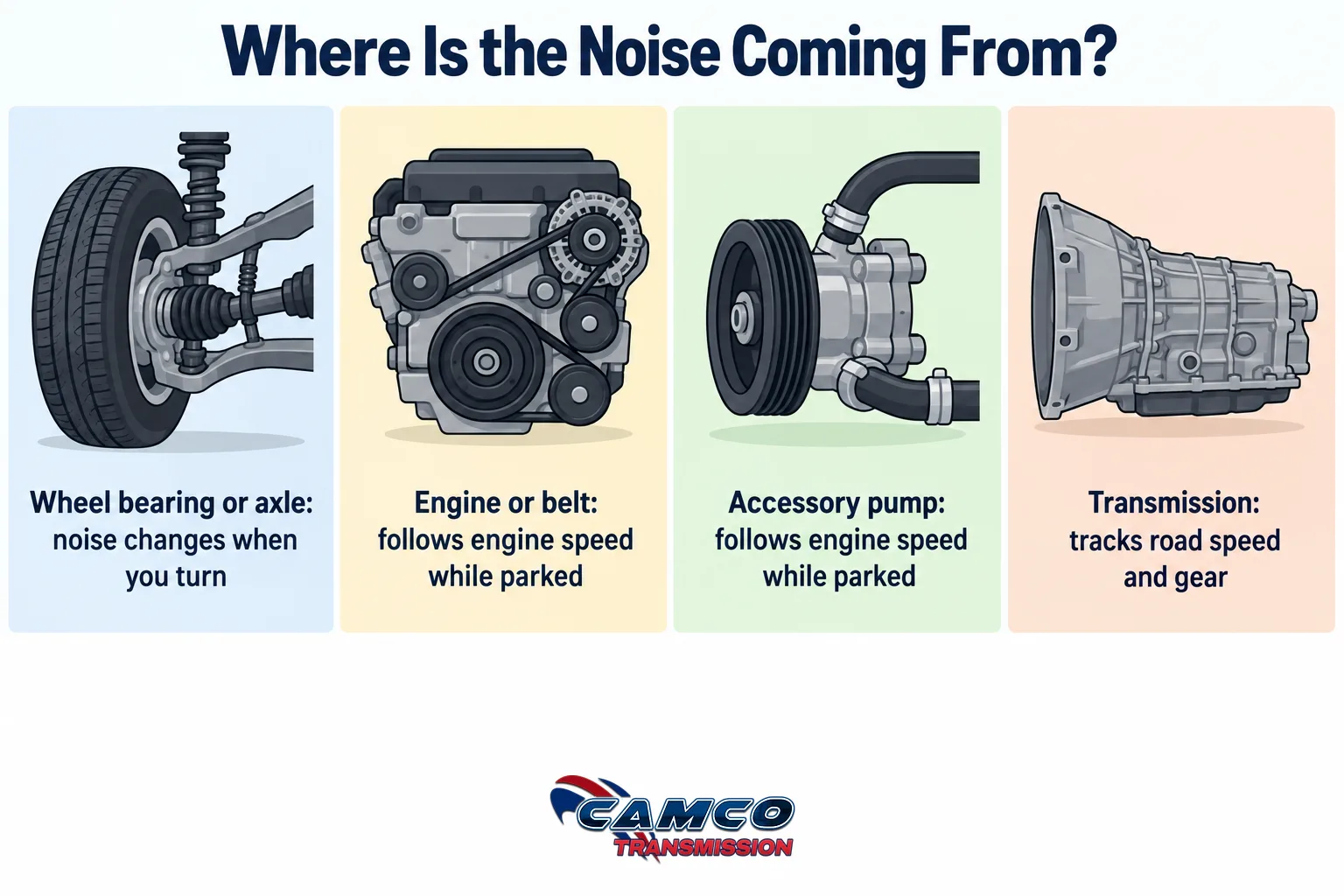
Try a few simple checks. If the noise changes when you turn, a wheel bearing or axle is a likely suspect. If it follows engine speed even when the car is parked, the engine, a belt or an accessory like the power steering pump may be the source. If it tracks road speed and gear, the transmission moves higher on the list.
These are clues, not proof. A transmission pump also spins with the engine, so a fluid-related whine can show up while parked.
Does the noise change with temperature?
It can. Some noises are loudest when the fluid is cold and thick. Others appear after a long drive, when the fluid is hot and thin. Las Vegas summers are hard on transmission fluid, and heat is a common reason it breaks down. If your noise shows up after a long hot drive, read up on transmission overheating in Las Vegas heat.
What are the first signs of transmission failure?
The first signs are usually a new noise plus a change in how the car feels: slipping, delayed engagement, harsh shifts, a burning smell or a leak. Any one of these deserves attention. Several together deserve it quickly.
- The engine revs but the car does not speed up the way it should. See what transmission slipping means.
- The car pauses before moving when you shift into Drive or Reverse.
- Shifts feel rough or jerky.
- You smell something sharp or burnt after driving.
- You find red or brown fluid under the car. Our guide on red fluid under your car explains what the color can mean.
- A dashboard light comes on. Here is what to do with a transmission warning light.
When should I stop driving?
If the car slips badly, will not engage a gear, smells burnt or is leaving a puddle, cut back on driving and get it looked at. Running a transmission low on fluid, or while it slips, can turn a smaller repair into a larger one. If you have to move the car, keep the trip short and gentle.
How do I stop a whining transmission?
You stop a whine by finding what is causing it, and the first and cheapest thing to check is the fluid. A whine is a symptom. A bottle of additive rarely solves the real problem.
- Write down the details. Note the speed, gear, whether the engine is cold or warm, and whether the noise changes when you let off the gas.
- Check for leaks. Look under the car in the morning for red, pink or brown spots. A leak is a common reason for low fluid.
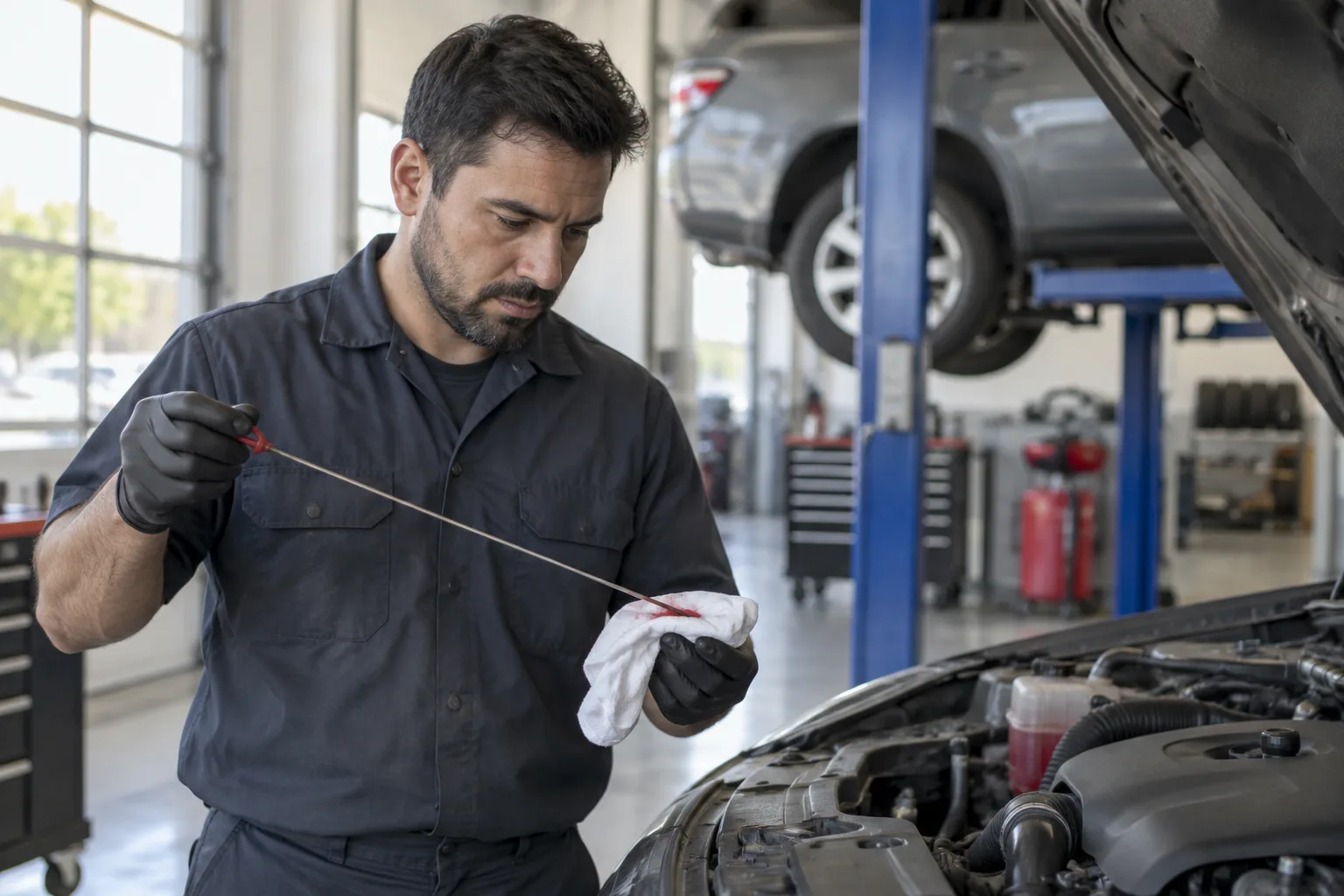
- Check the fluid level and condition. Follow your owner's manual, because many cars need the engine running and warm, and some have no dipstick. Fluid should look clean and not smell burnt.
- Do not add random products. The wrong fluid or additive can cause new problems.
- Get a proper diagnosis. A technician can confirm whether the source is fluid, the pump, the torque converter or something outside the transmission.
Will a fluid change fix the noise?
Sometimes, if low or old fluid is the whole problem. If parts are already worn, new fluid won't undo the damage. A change and a flush are not the same thing either, and our post on fluid change versus flush explains which fits which situation.
Take the Next Step With the Noise Your Car Is Making
If your car whines, hums or grinds when you accelerate, get it checked before the noise turns into a breakdown on a busy road. Once you know the cause, you can weigh your options calmly instead of guessing.
CAMCO Transmission is a car repair and maintenance shop in Las Vegas, just east of The Orleans Hotel & Casino on Wynn Road. We have 20+ years of experience, a BBB A+ accreditation and ATRA membership. We explain what we find in plain English, including why it is happening and what your options are. If a rebuild is the right answer, full rebuilds carry a 12,000-mile/1-year warranty, and a 24,000-mile/2-year warranty upgrade is available.
Running a fleet? The same careful diagnosis applies across multiple vehicles. To start with the noise you're hearing, book a transmission diagnostic in Las Vegas.
Frequently Asked Questions
What does a bad transmission sound like when accelerating?
It often sounds like a whine that rises with speed, a hum or drone under load, or a grinding or buzzing as gears change. The sound usually comes with a change in how the car shifts or responds. A technician needs to confirm the source.
What are the first signs of transmission failure?
Common early signs are a new noise, slipping, delayed engagement, harsh shifts, a burning smell, leaking fluid or a warning light. One sign on its own can have simple causes. Several together are a good reason to get the car diagnosed.
What kind of noise does a failing transmission make?
A failing transmission can whine, hum, buzz, clunk or grind. Whining often relates to fluid or the pump, while grinding often points to worn gears or clutch parts. The noise may change with speed, gear or temperature.
How do I stop a whining transmission?
Start by checking for leaks and checking the fluid level and condition the way your owner's manual describes. If the fluid is low or old, correcting that may help. If the whine continues, parts such as the pump or torque converter may be wearing and need a proper diagnosis.
Can I keep driving with a noisy transmission?
Short, gentle trips may be possible with a mild noise, but it is risky. If the car slips, grinds, smells burnt or leaks fluid, limit driving and have it checked. Driving on a failing transmission can make the repair bigger.
Could the noise be something other than the transmission?
Yes. Wheel bearings, CV axles, belts, the power steering pump and exhaust leaks can sound similar. Noting whether the sound changes with turning, engine speed or road speed helps narrow it down, but only an inspection can say for sure.
More articles
- Signs of a Bad Transmission Solenoid
- Truck and Van Transmission Repair in Las Vegas
- Transmission Repair Near the Las Vegas Strip for Locals and Workers
- Torque Converter Problems: Signs, Causes and Repair Options
- Car Shifting Hard? What Hard Shifts Mean for Your Transmission
- Transmission Shop Near The Orleans Hotel & Casino