Torque Converter Problems: Signs, Causes and Repair Options
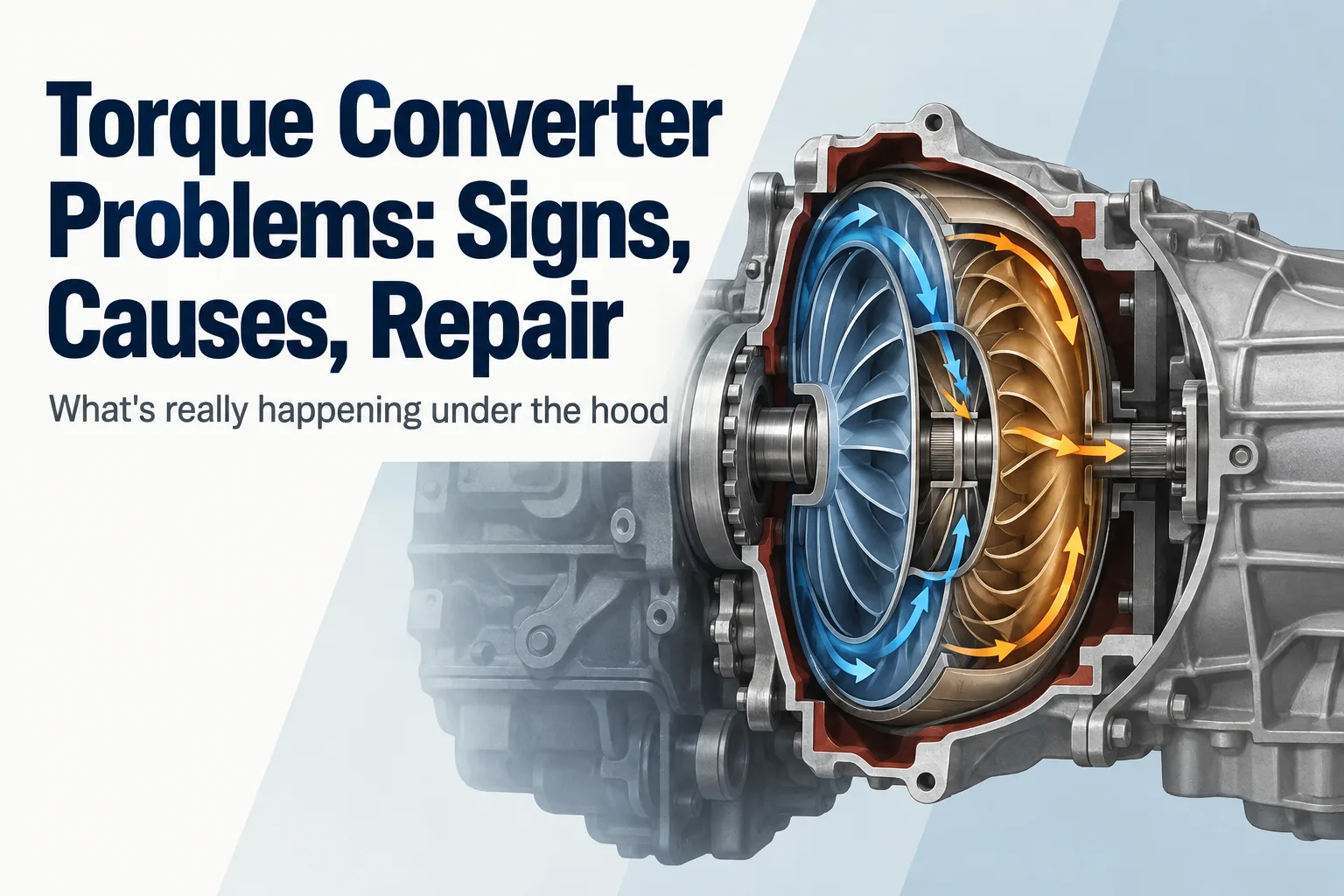
A shudder around 30 to 45 mph, a slip where the engine revs but the car doesn't catch up, fluid running hotter than normal — that's torque converter problems announcing themselves. The torque converter sits between your engine and transmission, using transmission fluid to transfer power smoothly. When it starts to fail, that power transfer gets rough, inconsistent, or weak.
None of this means you need a new transmission right away. It does mean the problem won't fix itself. Keep driving on a failing converter and you put stress on parts around it that cost a lot more to replace.
Here's how to recognize torque converter trouble, what drives the repair cost, and why heat is usually the real root cause.
- A shudder or vibration felt specifically around 30 to 45 mph often points to the torque converter's lockup clutch, not the engine or tires.
- Slipping, where engine RPM rises without matching acceleration, is a sign the converter or transmission is losing its grip on power.
- Heat is the most common reason torque converters and transmissions fail early, so cooling and fluid condition matter more than most drivers realize.
- A proper transmission diagnostic can tell you whether the converter is the problem before you pay for parts you may not need.
- A torque converter built for the life of the vehicle can still fail early under heavy towing, stop-and-go heat, or neglected fluid.
Table of Contents
How Do I Know My Torque Converter Is Going Bad?
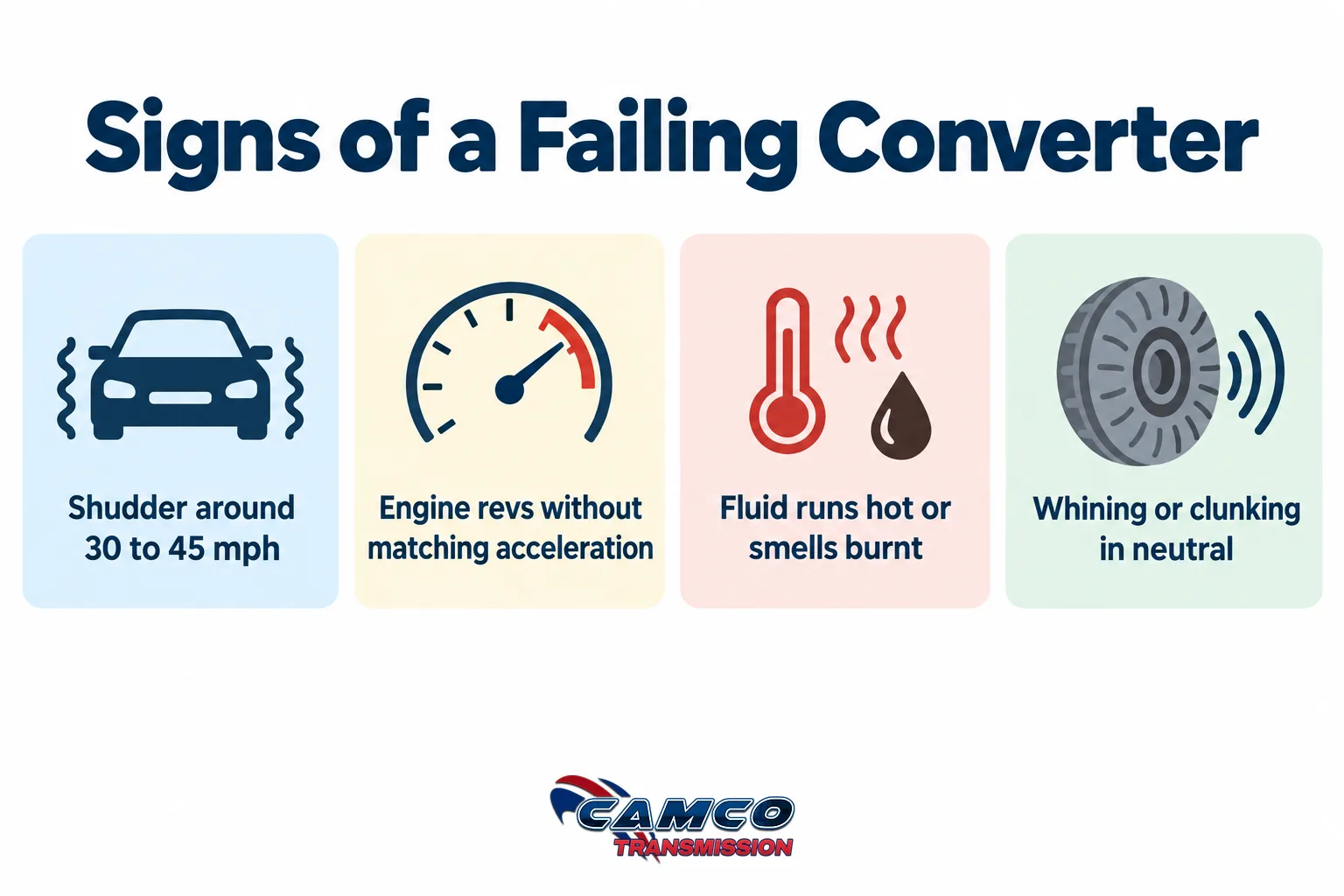
The clearest signs are a shudder at steady highway speed, slipping under acceleration, and transmission fluid that runs hot or smells burnt. The torque converter uses fluid pressure to pass engine power into the transmission, and it has a lockup clutch that engages once you reach cruising speed to improve efficiency. When that clutch wears or starts to slip, you feel it as a vibration that comes and goes with speed, not a steady rattle.
What does a failing torque converter feel like while driving?
Drivers usually describe a shudder or light vibration that shows up around 30 to 45 mph and disappears when you speed up, slow down, or stop. Some notice the engine revving higher than normal without the car picking up speed — that's the transmission slipping under load. A whining or clunking noise in neutral, or a transmission running noticeably hotter on a hot Las Vegas afternoon, are also common early signs.
Seeing any of this? It's worth comparing notes with the signs covered in what transmission slipping means, since converter problems and general slipping often look alike from the driver's seat.
- Note when it happens. Write down the speed, whether the engine is cold or warmed up, and if it happens more in stop-and-go traffic or on the freeway.
- Check the fluid. Dark, burnt-smelling fluid or fluid with metal flecks points toward internal wear, including the converter.
- Get a diagnostic before it gets worse. A shop can pull codes and run the vehicle to confirm whether the converter, the fluid, or another part of the transmission is behind the symptom.
What Is the Average Cost of Replacing a Torque Converter?
Cost depends on labor to access the converter, whether fluid contamination means other parts need attention too, and your specific vehicle. A torque converter sits behind the transmission, so most vehicles require the transmission to come out to reach it. That labor is usually the bigger part of the bill, not the converter itself.
What makes the job more or less expensive?
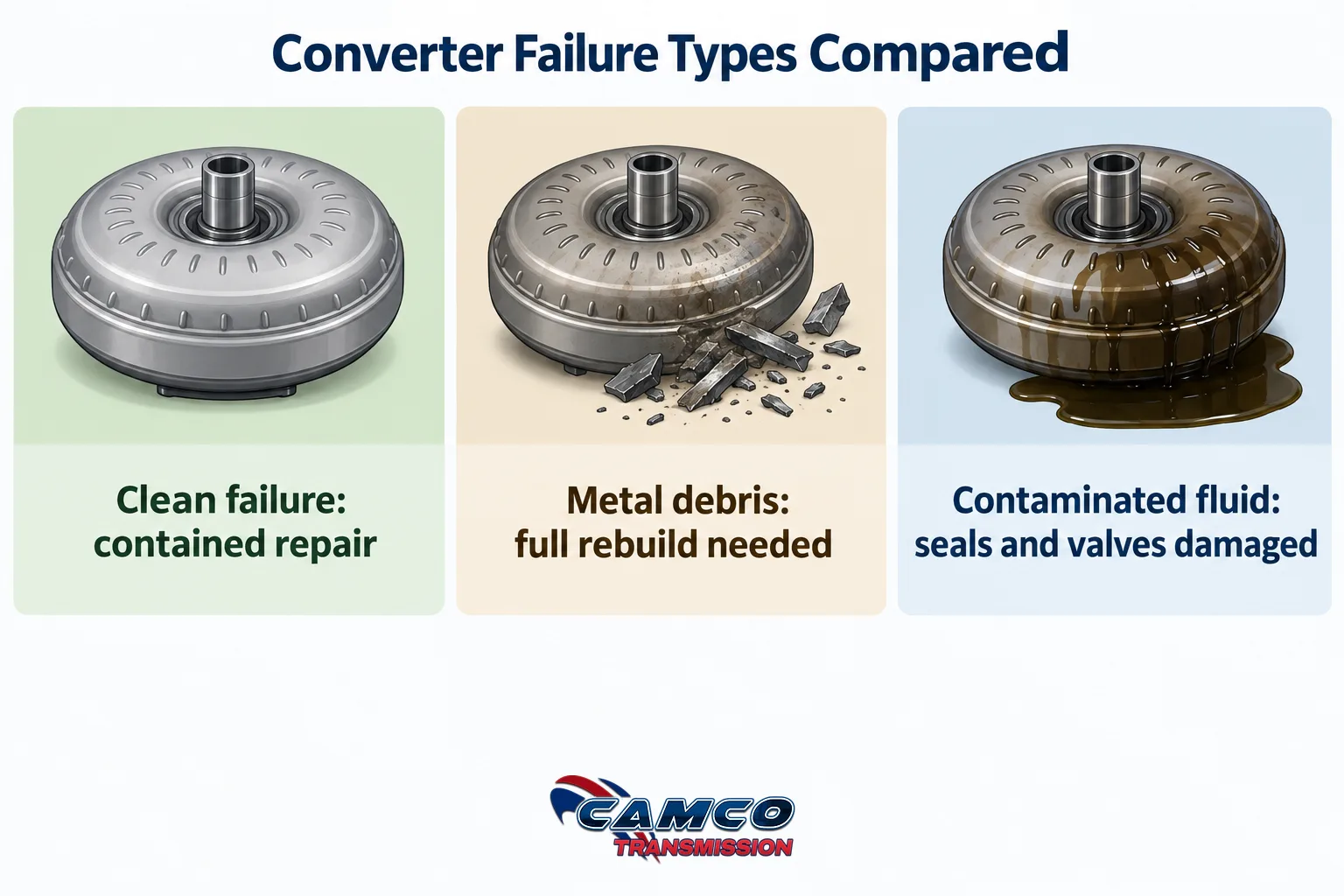
If the converter failed cleanly, with no metal debris circulating through the fluid, the repair can stay fairly contained. But if worn clutch material or metal shavings have traveled through the transmission, a full rebuild becomes the safer option — contaminated fluid can damage seals, clutches, and valves elsewhere in the unit. For a breakdown of how rebuild pricing actually comes together, see how much a transmission rebuild costs in Las Vegas, since converter replacement is often bundled into that same job.
The only honest way to get a real number is a hands-on diagnostic. Guessing at a price before anyone has looked at the fluid or pulled codes rarely holds up.
What Is the Biggest Killer of Transmissions?
Heat is the single biggest killer of automatic transmissions, including torque converters. Transmission fluid is designed to cool and lubricate moving parts, but once it gets too hot, it breaks down and stops protecting clutches, bands, and the converter's lockup clutch. That breakdown speeds up wear on everything the fluid touches.
Why does heat matter so much in Las Vegas?
Stop-and-go traffic on the Strip or Tropicana Avenue in summer heat pushes transmission fluid temperatures higher than cooler climates or steady highway driving ever would. Towing, heavy loads, and low or old fluid make it worse, since there's less fluid volume to absorb and carry away heat. Over time, this is why fluid condition and cooling matter as much as mileage. Transmission overheating in Las Vegas heat goes deeper into how local conditions speed up this wear.
What Is the Lifespan of a Torque Converter?
A torque converter is built to last the life of the transmission under normal conditions, often well past 100,000 miles, but neglect and heat can cut that short. There's no fixed mileage at which converters are expected to fail. Lifespan tracks closely with how well the fluid has been maintained and how much heat stress the vehicle has seen.
What shortens a torque converter's life?
Old or low fluid, frequent towing, stop-and-go city driving in high heat, and contamination from wear elsewhere in the transmission all shorten converter life. Skipping fluid service intervals is one of the most preventable causes, since fresh fluid keeps the lockup clutch and internal seals working as designed. Catching a shudder or slip early, rather than driving on it, is usually what separates a contained repair from a full rebuild.
Get a Straight Answer on Your Torque Converter
A shudder at highway speed or fluid that runs hot deserves a real look before it turns into a bigger repair. CAMCO Transmission is BBB A+ accredited, holds ATRA membership, and has worked on foreign and domestic transmissions in Las Vegas for over 20 years, with full rebuilds backed by a 12,000-mile, one-year warranty and a 24,000-mile, two-year upgrade available. CAMCO is located just east of The Orleans Hotel & Casino on Wynn Road.
If you're seeing shudder, slip, or heat, start with a straight diagnosis instead of guessing at parts — book a transmission repair diagnostic in Las Vegas and find out exactly what the torque converter and transmission need.
Frequently Asked Questions
How do I know my torque converter is going bad?
Watch for a shudder or vibration around 30 to 45 mph, slipping where RPM rises without matching speed, and transmission fluid that runs hot or smells burnt. These symptoms point toward the converter's lockup clutch wearing or the fluid breaking down.
What is the average cost of replacing a torque converter?
Cost depends on labor to access the part, your vehicle, and whether fluid contamination means other components need attention too, since most vehicles require pulling the transmission to reach the converter. A hands-on diagnostic is the only reliable way to get an accurate number for your specific case.
What is the biggest killer of transmissions?
Heat is the most common cause of early transmission and torque converter failure, since overheated fluid breaks down and stops protecting internal parts. Stop-and-go traffic in hot climates and low or neglected fluid make this worse.
What is the lifespan of a torque converter?
A torque converter is built to last as long as the transmission under normal use, often well past 100,000 miles, but towing, heat, and neglected fluid can shorten that significantly. Fluid condition is a bigger factor in converter life than mileage alone.
Can a torque converter be repaired instead of replaced?
In some cases, yes, especially if the issue is limited to the lockup clutch or seals without contamination spreading through the fluid. A diagnostic will confirm whether a repair is possible or whether a replacement or rebuild is the safer route.
Does a bad torque converter throw a check engine light?
It can. Torque converter clutch problems often trigger diagnostic codes related to slippage or lockup clutch performance, which show up during a code scan even before symptoms feel severe.
More articles
- Signs of a Bad Transmission Solenoid
- Transmission Noise When Accelerating: Whining, Humming or Grinding
- Truck and Van Transmission Repair in Las Vegas
- Transmission Repair Near the Las Vegas Strip for Locals and Workers
- Car Shifting Hard? What Hard Shifts Mean for Your Transmission
- Transmission Shop Near The Orleans Hotel & Casino