How Much Does a Transmission Rebuild Cost in Las Vegas?
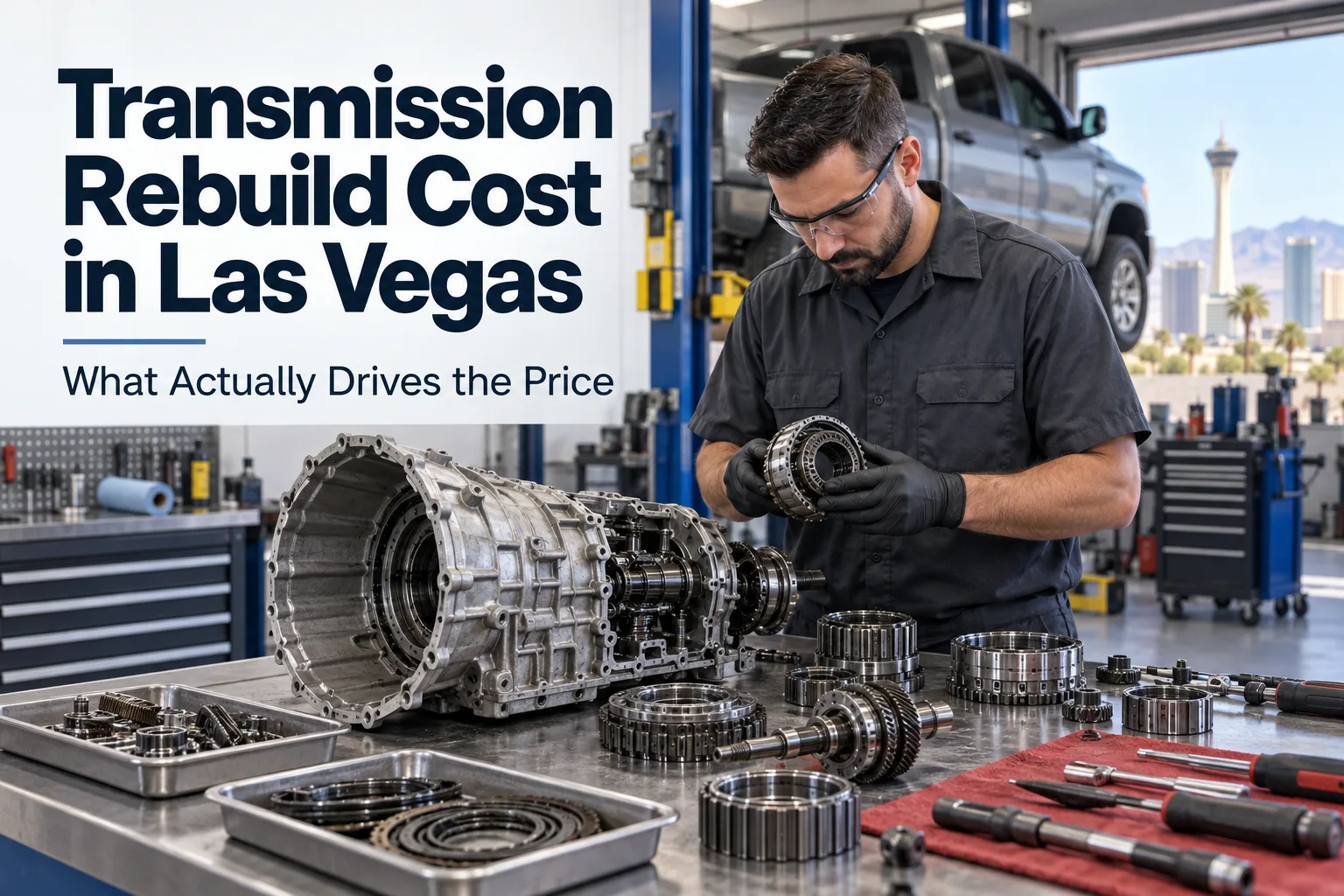
Transmission rebuild cost in Las Vegas comes down to three things: your vehicle, how much damage is inside the transmission, and whether the parts it needs are sitting on a shelf or have to be tracked down. There is no single number that fits every car. A four-cylinder sedan and a heavy-duty truck transmission are built differently, and they fail differently too. The honest answer starts with a diagnosis, not a price list.
If you are staring at a quote, or waiting on one, it helps to know what you are actually paying for. A rebuild is slow, hands-on work: the transmission comes out of the vehicle, gets torn apart, inspected part by part, and rebuilt with new components wherever they are needed. That is a different job than swapping in a used unit, and the price reflects it.
Here is what shapes the cost, how rebuilding stacks up against replacing, and what happens once the work is underway.
Key Takeaways
- Rebuild cost depends on your transmission type, the extent of internal damage, and parts availability for your specific vehicle.
- A rebuild is usually less expensive than a full replacement, but a proper comparison needs a real diagnosis first, not a guess.
- A full rebuild backed by a written warranty protects you if something goes wrong after the work is done; ask what the warranty covers before you approve any job, and see current options at Las Vegas transmission rebuild service.
- Most rebuilds take several days to about a week, longer if parts have to be ordered for an older or less common vehicle.
- Getting a diagnosis in writing before repairs start is the single best way to avoid surprise costs later.
Table of Contents
How much do transmission rebuilds usually cost?
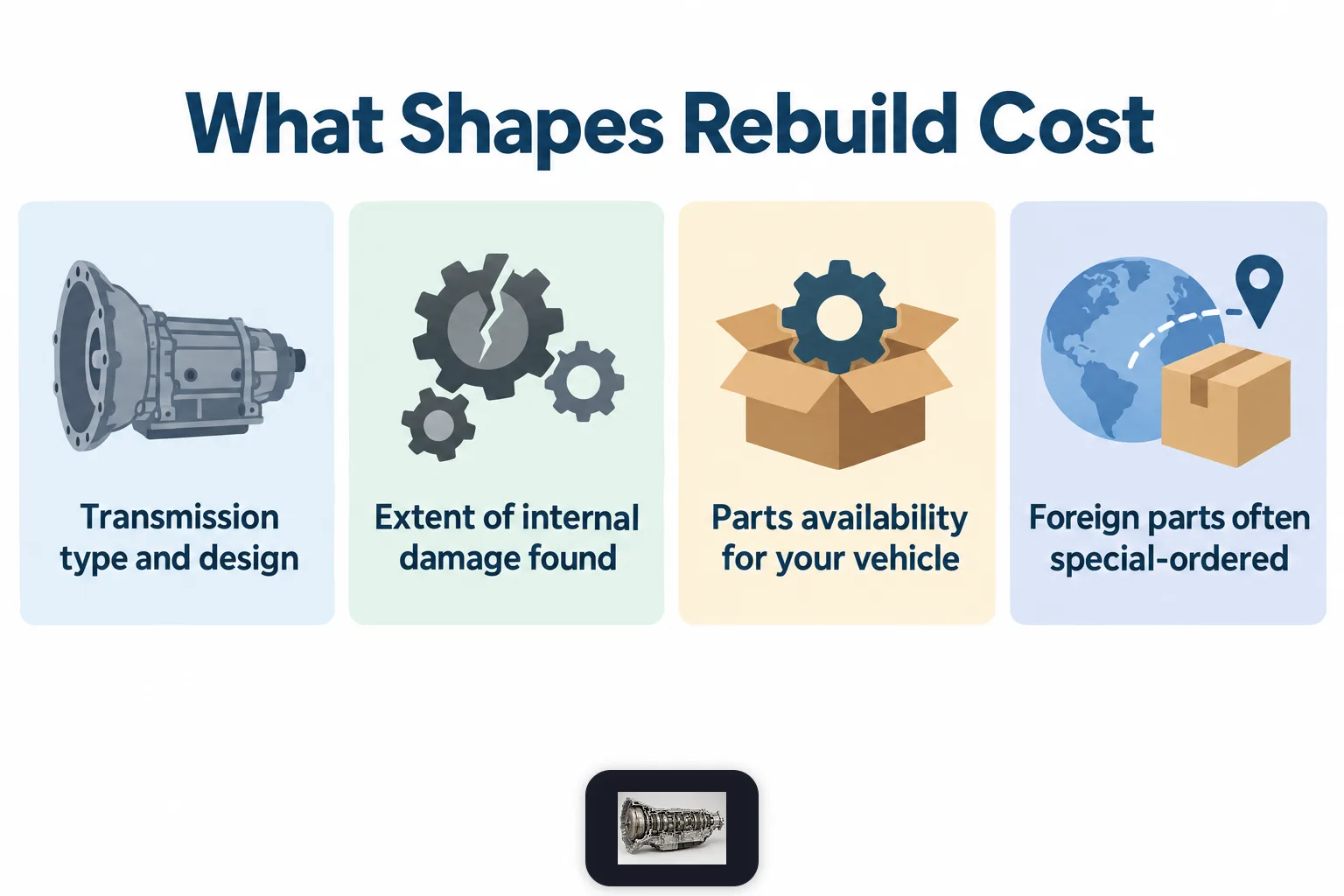
The cost is driven by your vehicle's transmission design, the damage found during teardown, and the parts that design requires. A rebuild means removing the transmission, opening it up, and replacing worn clutches, bands, seals, gaskets, and sometimes hard parts like the torque converter or valve body. The more of those parts that need replacing, and the harder they are to find for your make and model, the higher the labor and parts bill climbs.
What makes one rebuild more expensive than another?
Vehicles with more complex transmissions, like those with multiple gear ranges or electronically controlled shifting, generally cost more to rebuild than simpler, older designs. Foreign vehicles can run higher too, if parts have to be special-ordered instead of pulled from local stock. None of this is guesswork once a shop has the transmission open. It is just the actual condition of the parts sitting in front of them.
Why do two shops quote different prices for the same car?
Quotes vary because shops differ in what they inspect, what parts they use, and what warranty backs the work. A lower number that skips a full teardown inspection can turn into a second repair bill later. Ask what the quote actually includes before you compare it to another shop's number.
Is it cheaper to rebuild or replace a transmission?
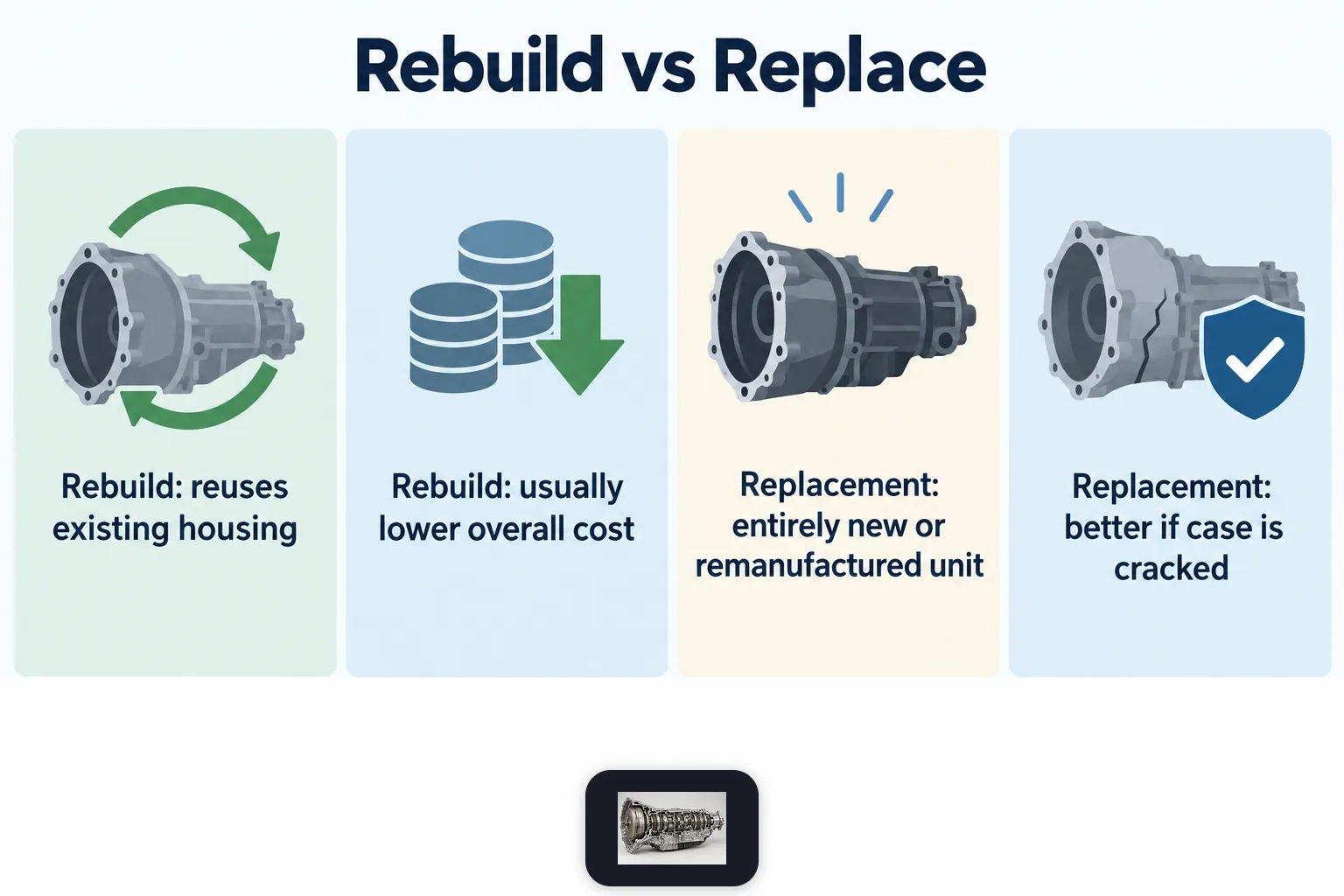
Rebuilding is usually less expensive than full replacement, because it reuses the transmission housing and only replaces what actually failed. Replacement means installing an entirely new or remanufactured unit, which costs more in parts even though labor can sometimes run similar. The right call depends on how old the vehicle is, how much damage there is, and whether you plan to keep driving it for years or trade it in soon.
When does replacement make more sense than a rebuild?
Replacement can make sense if the transmission case itself is cracked or damaged beyond repair, or if a rebuild would cost close to what a replacement unit costs anyway. A shop should walk you through both options side by side, with the reasoning for each, instead of pushing one by default. For a fuller breakdown of how these two paths compare, see repair, rebuild or replace: what your transmission really needs.
Is getting my transmission rebuilt worth it?
A rebuild is worth it when the rest of the vehicle is in good shape and you plan to keep driving it, especially if the rebuild comes with a warranty. Paying for a rebuild on a car with other serious problems, like a failing engine or heavy body damage, is a different math problem than paying for one on a vehicle that is otherwise solid.
What should a warranty on a rebuild actually cover?
A warranty should cover parts and labor if the transmission fails again within the covered mileage and time period, not just a narrow list of components. Ask for the warranty terms in writing, including mileage and time limits, before you approve the work. A 12,000-mile, one-year warranty on a full rebuild is a common baseline in the industry, with longer coverage sometimes available as an upgrade. Confirm exactly what any shop offers before you sign off.
How long does a full transmission rebuild take?
Most rebuilds take several days to about a week, depending on parts availability and how much teardown and inspection the job needs. The timeline is not just wrench time. It includes diagnosis, ordering the right parts, the rebuild itself, and a road test before the vehicle goes back to you.
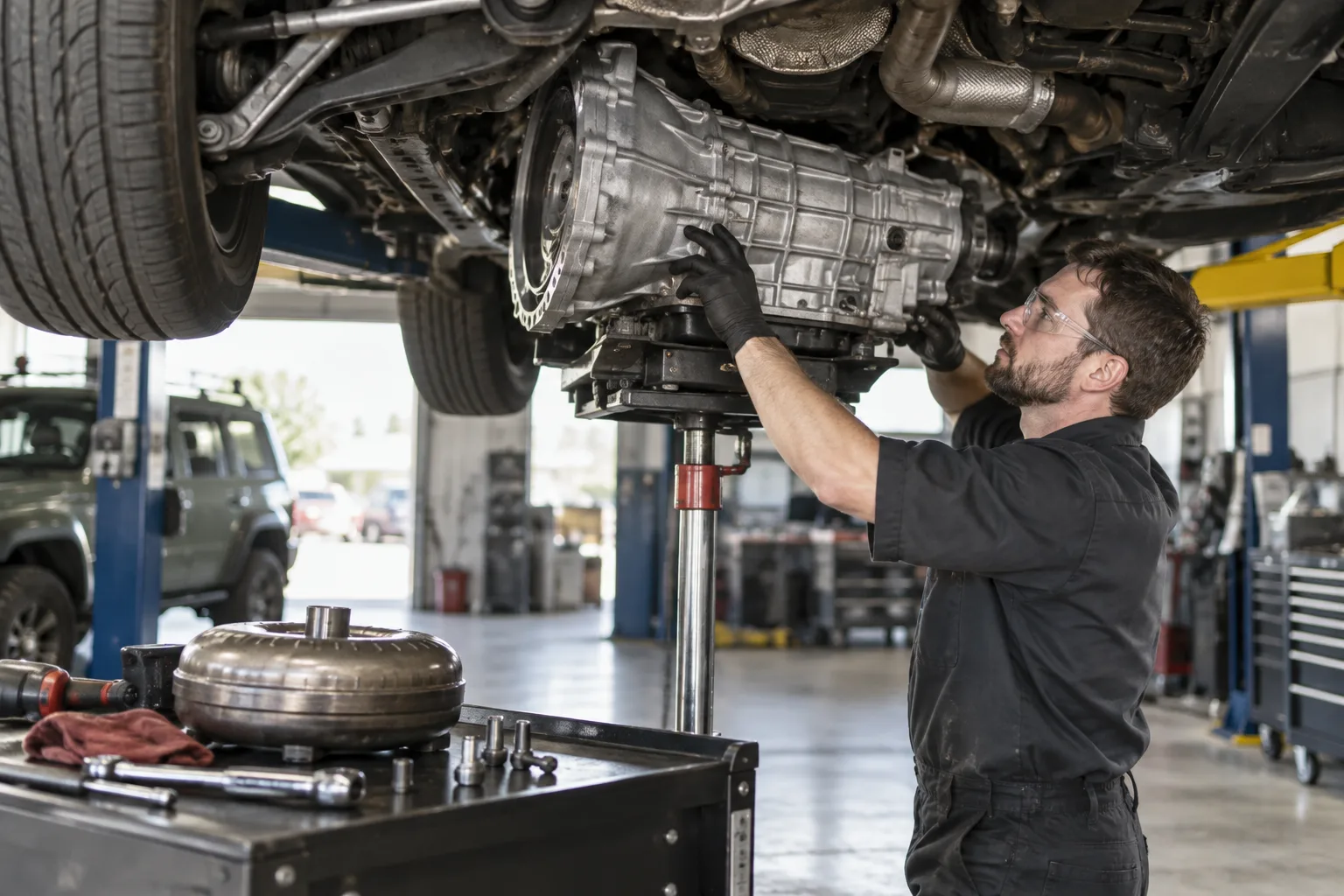
- Diagnosis and teardown. The transmission is removed and opened up to see exactly what has failed inside.
- Parts sourcing. Needed components are ordered, which can take longer for less common vehicles.
- Rebuild and reassembly. Worn parts are replaced and the transmission is rebuilt to original specifications.
- Reinstallation. The rebuilt transmission goes back into the vehicle and is connected to all its systems.
- Road testing. The vehicle is driven and checked to confirm shifting is smooth before it is returned.
What can slow down a rebuild timeline?
Parts delays are the most common holdup, especially on older vehicles or less common foreign models where components are not kept on a local shelf. A shop that tells you straight where the job stands, and why, is doing you a favor, even when the news is “it will take a bit longer.”
Get an Honest Number for Your Transmission
A real cost figure for your transmission rebuild starts with a proper diagnosis, not a phone estimate. Sal Cam offers transmission diagnostics, rebuilds, and full repairs for foreign and domestic vehicles in Las Vegas, backed by BBB A+ accreditation, ATRA membership, and over 20 years of experience. Rebuilds come with a 12,000-mile, one-year warranty, with a 24,000-mile, two-year upgrade available if you want extra peace of mind.
Service is available in Spanish as well as English, and fleet owners can get dependable maintenance across multiple vehicles. If a current coupon applies to your repair, check current transmission repair offers before you book. Start with a straight answer about your transmission at Las Vegas transmission rebuild service.
Frequently Asked Questions
How much do transmission rebuilds usually cost?
Cost depends on your vehicle's transmission design, the parts needed, and how much damage is found once the transmission is opened up. There is no flat rate that applies across all vehicles, which is why a real diagnosis matters more than a phone quote.
Is it cheaper to rebuild or replace a transmission?
Rebuilding is usually less expensive than installing a full replacement unit, since it reuses the existing housing and only replaces worn or failed parts. Replacement can still make sense if the case itself is damaged or if a rebuild would cost close to a replacement anyway.
Is getting my transmission rebuilt worth it?
It is generally worth it when the rest of the vehicle is in good condition and the rebuild is backed by a written warranty covering parts and labor. It makes less sense on a vehicle with other major problems that limit how much longer you plan to drive it.
How long does a full transmission rebuild take?
Most rebuilds take several days to about a week, depending on how quickly parts can be sourced for your specific vehicle. Older or less common foreign models can take longer if components need to be special-ordered.
What's included in a transmission rebuild?
A rebuild typically includes removing and tearing down the transmission, inspecting every internal part, replacing worn clutches, bands, seals, and gaskets, and reassembling and road testing the unit before it goes back in the vehicle. Hard parts like the torque converter or valve body are replaced if the inspection shows they need it.
Does a transmission rebuild come with a warranty?
A quality rebuild should come with a written warranty covering parts and labor for a set mileage and time period. Ask for those terms in writing before approving the job, so you know exactly what is covered if a problem comes up later.
More articles
- Signs of a Bad Transmission Solenoid
- Transmission Noise When Accelerating: Whining, Humming or Grinding
- Truck and Van Transmission Repair in Las Vegas
- Transmission Repair Near the Las Vegas Strip for Locals and Workers
- Torque Converter Problems: Signs, Causes and Repair Options
- Car Shifting Hard? What Hard Shifts Mean for Your Transmission