Transmission Slipping? Causes, Signs and Fixes in Las Vegas
Your transmission is slipping if the engine revs up but the car doesn't pick up speed to match it — or if there's a pause, a clunk, or a flare of RPM before it settles into gear. It might happen once and vanish. It might happen every single time you pull away from a light on Tropicana. Either way, pay attention.
A slip means the transmission briefly loses its grip between the engine and the wheels. Sometimes that's low fluid. Sometimes it's worn clutch material inside the unit. Either way it feels about the same, which is exactly why so many drivers brush it off until it gets worse.
Here's what it actually feels like, what else can mimic it, how a shop tracks it down, and what it tends to cost.
Key Takeaways
- A slip usually feels like the engine racing without matching acceleration, or a delayed, hard, or missed shift.
- Low or burnt transmission fluid is one of the most common and least expensive causes, and it's worth ruling out first.
- Engine misfires and bad sensors can mimic a slip, so a proper diagnosis matters before any repair starts.
- Cost depends entirely on the cause: a fluid or sensor fix is a fraction of what a rebuild runs.
- Driving on a known slip for weeks tends to turn a cheap fix into an expensive one.
Table of Contents
What does it feel like if my transmission is slipping?
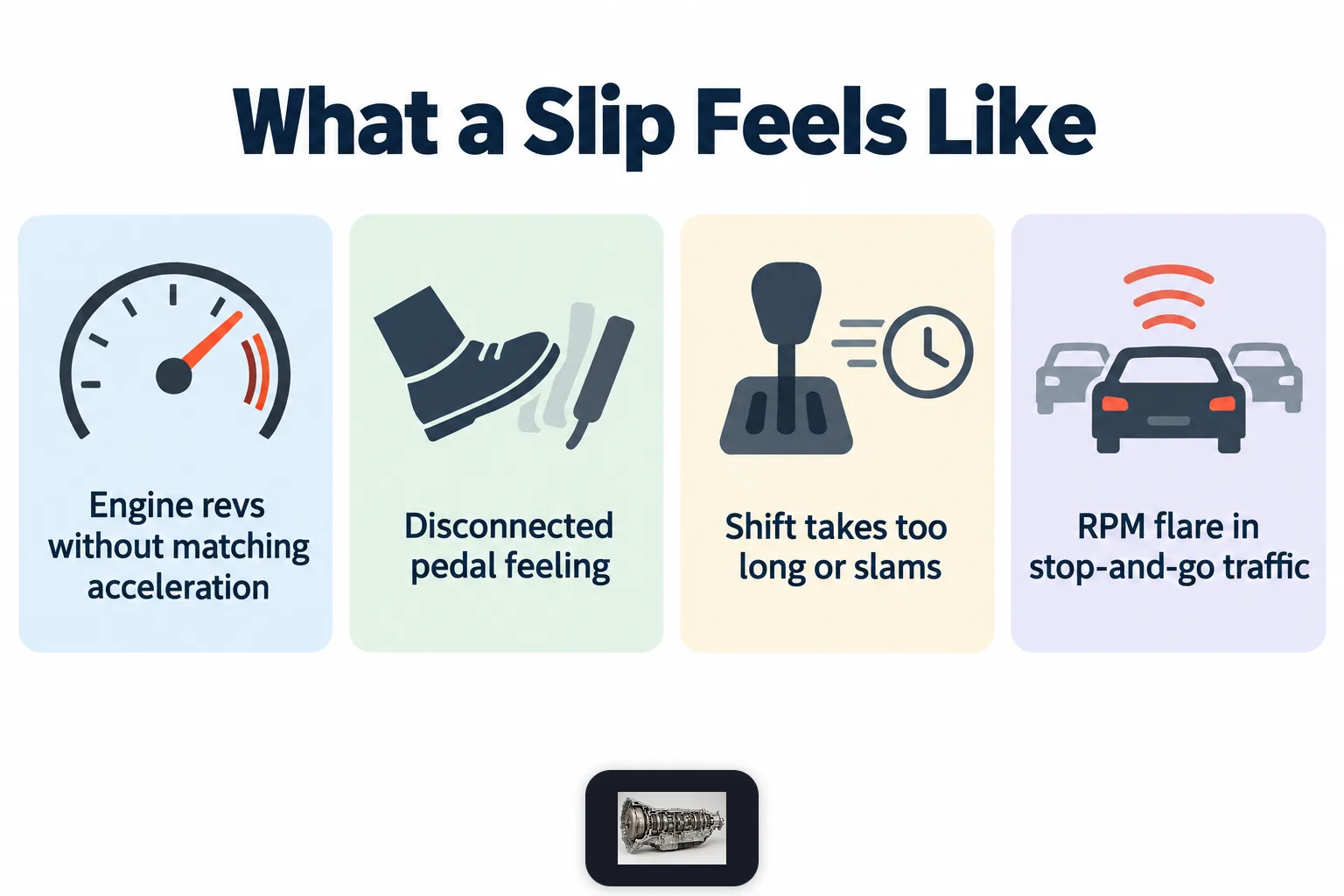
It feels like the engine is working harder than the car is moving. You press the gas, the RPM needle climbs, and the acceleration doesn't match what the engine sounds like it's doing. Some drivers call it a “disconnected” feeling, like the gas pedal and the wheels aren't quite talking to each other. Others notice a shift that takes too long, slams too hard, or just doesn't happen until the RPMs are way higher than they should be.
What does it feel like in stop-and-go Strip traffic?
This is often where a slip shows up first, since stop-and-go driving forces the transmission to shift over and over. A hesitation pulling away from a light, or a flare of RPM while you're crawling through traffic near the Strip or on the freeway during event traffic, is a classic early sign. It's easy to blame on the traffic itself — which is exactly why it gets missed.
What happens inside the transmission when it slips?
Inside an automatic transmission, clutch packs and bands grip and release to change gears. Fluid pressure is what makes them grip tightly. If that pressure drops, or the clutch material wears thin, the grip isn't firm enough to send all the engine's power through. So the engine spins a little faster than it should for the speed you're going — some of that power never makes it to the wheels.
What can be mistaken for a transmission slip?
An engine misfire, a bad sensor, or worn engine mounts can all feel a lot like a slip. Worth knowing, because it keeps you from assuming the worst before anyone's actually looked at the car.
Could a bad spark plug or sensor feel like a slip?
Yes. A misfire causes the engine to lose power for a moment, and that dip can feel exactly like a slip. A faulty speed sensor can also confuse the transmission's computer into shifting at the wrong time — which feels like a slip but isn't one mechanically. That's exactly why the check-engine light is worth reading with a scan tool instead of guessing from the symptom alone.
How do you fix transmission slipping?
You fix it by finding the actual cause first, then addressing that specific part — not by guessing. A real diagnosis checks fluid level and condition, scans for stored codes, and often road-tests the car to feel exactly when and how the slip happens.
- Check the fluid. Low, dirty, or burnt-smelling fluid is checked first because it's common and inexpensive to correct.
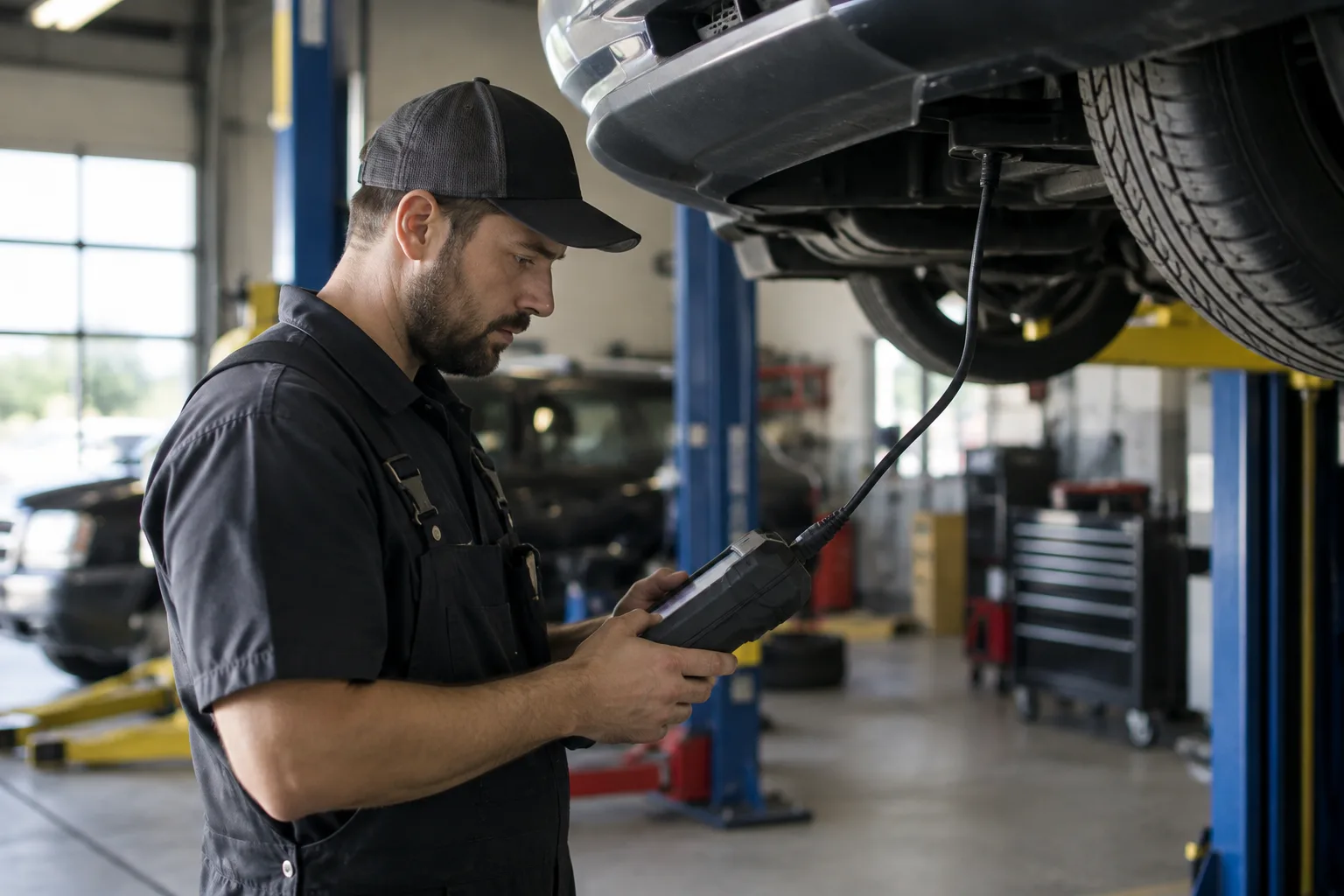
- Pull diagnostic codes. A scan tool reads stored codes from the transmission control module to point toward a sensor, solenoid, or pressure issue.
- Road-test the vehicle. Feeling exactly when the slip happens — cold, hot, under load, at a specific gear — narrows down which part is involved.
- Inspect internally if needed. If fluid and electronics check out, worn clutches or bands inside the unit point toward a rebuild.
A proper transmission diagnostic works through these steps in order, so you're not paying to swap parts that were never the problem.
How much does it usually cost to fix a slipping transmission?
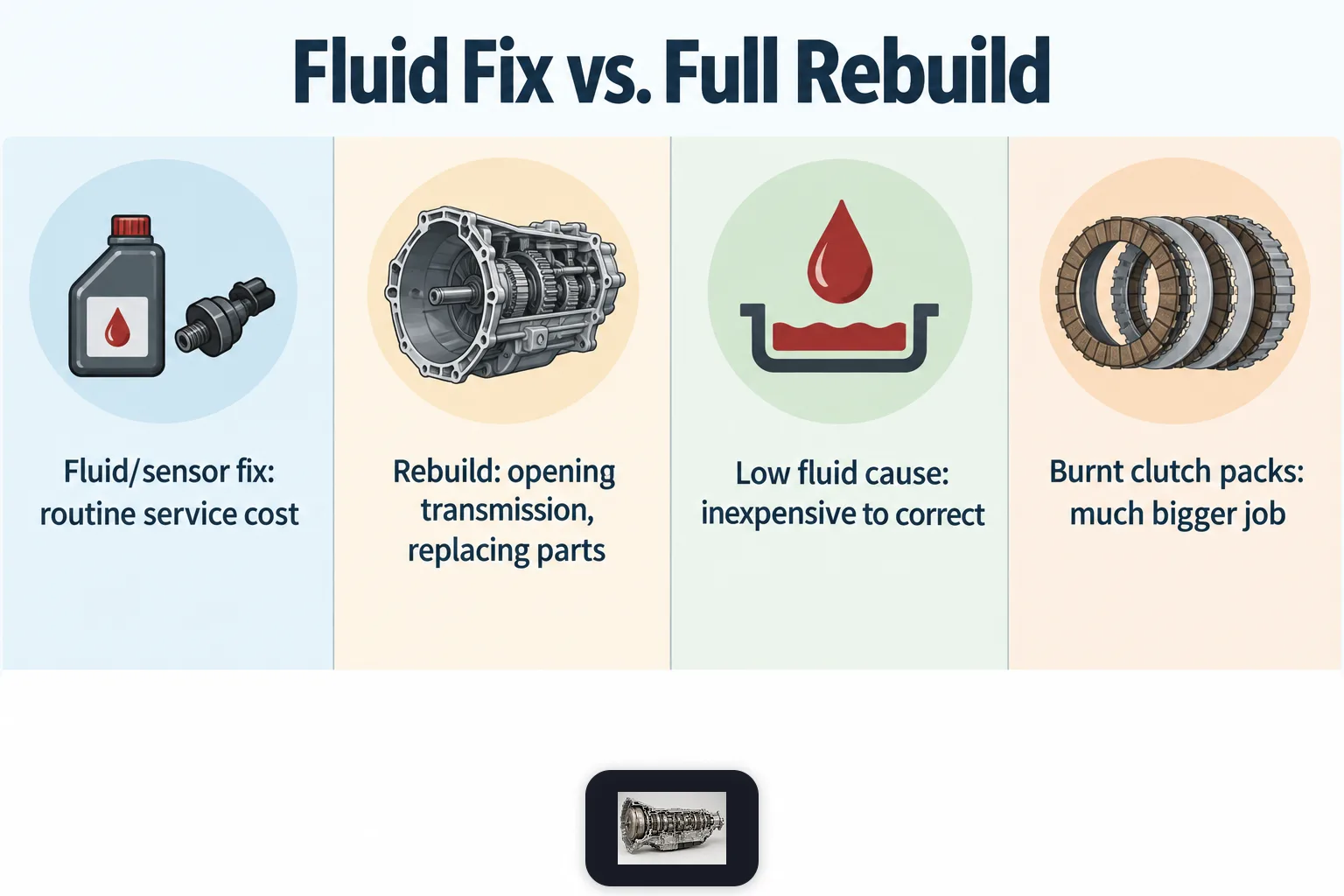
It ranges from a simple fluid service to a full rebuild — the cause decides which end you land on. There's no honest single number to give here, because a slip caused by old fluid and a slip caused by burnt clutch packs are two completely different repairs.
Does the cost depend on whether it's repaired or rebuilt?
Yes, a lot. A fluid change or sensor replacement is a routine service cost. A rebuild means opening the transmission, replacing worn internal components, and reassembling it to spec — a much bigger job, priced accordingly. Finding out honestly which category your car falls into is the whole point of a real diagnosis before any work starts.
Get a Straight Answer on Your Slipping Transmission
Guessing at a transmission slip rarely ends well. The same symptom can mean a ten-dollar fluid top-off or a full rebuild. CAMCO is a Las Vegas transmission shop with BBB A+ accreditation and ATRA membership, with over 20 years of experience diagnosing transmissions in foreign and domestic vehicles across the valley, from commuters to rideshare drivers.
If a rebuild turns out to be the right call, CAMCO backs it with a 12,000-mile or one-year warranty, with a 24,000-mile or two-year upgrade available. Spanish-speaking customers get the same plain-English explanation of what's wrong and what it costs.
If your car's doing any of this, get it on a lift before the slip turns into a tow — start with an honest transmission repair diagnosis.
Frequently Asked Questions
Is it safe to drive with a slipping transmission?
Short trips at low speed carry less risk than highway driving, but a slip can worsen suddenly and leave you without power right when you need it — merging onto the freeway, for instance. It's safer to get it checked than to keep driving on it and hope it holds.
Can low transmission fluid cause slipping?
Yes — it's one of the most common causes. Fluid creates the hydraulic pressure that clutches and bands need to grip firmly. When fluid runs low or breaks down, that grip weakens and the transmission slips.
Will a transmission slip come and go?
It can, especially early on or when it's tied to temperature, which is part of what makes it so easy to dismiss. An intermittent slip is still worth having checked — the underlying cause doesn't go away just because the symptom isn't constant.
Does a slipping transmission always mean a rebuild?
No. Plenty of slips trace back to fluid condition, a sensor, or a solenoid — all far less involved than a rebuild. A rebuild only becomes necessary once the internal clutch material or hard parts are actually worn out.
How do I know if it's my transmission or my engine?
A transmission slip usually shows up as RPM rising without matching acceleration, or a delayed shift. Engine issues like a misfire tend to feel like a general loss of power at any speed, not just during a shift. A scan tool pulling codes from both systems is the reliable way to tell them apart — more on the difference is covered in 7 signs your transmission needs attention.
More articles
- Signs of a Bad Transmission Solenoid
- Transmission Noise When Accelerating: Whining, Humming or Grinding
- Truck and Van Transmission Repair in Las Vegas
- Transmission Repair Near the Las Vegas Strip for Locals and Workers
- Torque Converter Problems: Signs, Causes and Repair Options
- Car Shifting Hard? What Hard Shifts Mean for Your Transmission