Transmission Fluid Change vs Flush: Which Do You Need?
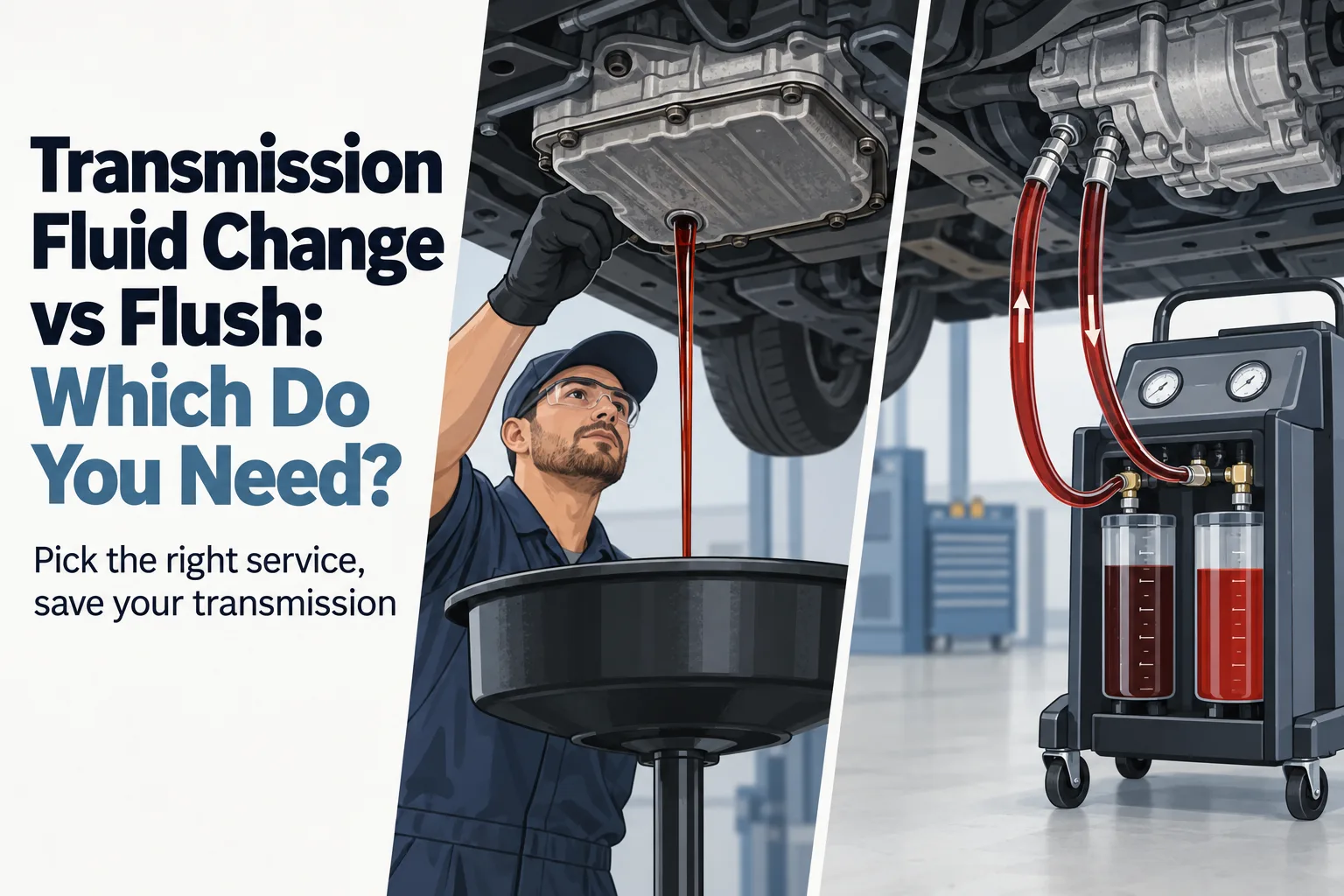
A fluid change drains the old fluid from the pan and refills it, usually swapping out somewhere between a third and half of what's in the system. A flush is a different animal: a machine pushes new fluid through the whole system, torque converter and cooler lines included, so almost all of the old fluid gets exchanged in one pass. Both jobs aim at the same thing, clean fluid in the transmission, but they're not the same tool for the same job. Pick wrong on an older or neglected transmission and you can do more harm than good.
The right call depends on your mileage, your maintenance history, and what's actually floating around in that fluid right now. Kept up with regular changes? A flush is usually fine. Years since anyone touched it? A flush can stir up more trouble than it solves.
Below: how to tell which service fits your car, how to check your own fluid level in the meantime, and what wears a transmission out faster than anything else on the road.
Key Takeaways
- A fluid change replaces part of the fluid from the pan; a flush exchanges nearly all of it under pressure.
- A flush on a high-mileage or long-neglected transmission can loosen debris and clog narrow passages.
- Check your fluid level and color before deciding between the two, using a dipstick or shop reading if your car doesn't have one.
- Old, worn-out fluid is one of the fastest ways to wear down a transmission, see our guide on transmission overheating in Las Vegas heat for how fluid breakdown and heat work together.
- If you're unsure which service your car needs, a quick diagnostic check settles it before you spend money on the wrong one.
Table of Contents
What is the difference between transmission fluid and transmission oil?
They're the same substance, just called two different things. “Transmission fluid” and “transmission oil” both mean the liquid that lubricates the gears, operates the clutches, and carries heat away from a working transmission. People say “oil” out of habit, since it looks and pours like engine oil. But it's built differently. Transmission fluid carries additives for friction, seal conditioning, and heat resistance that engine oil simply doesn't have, so the two should never stand in for each other.
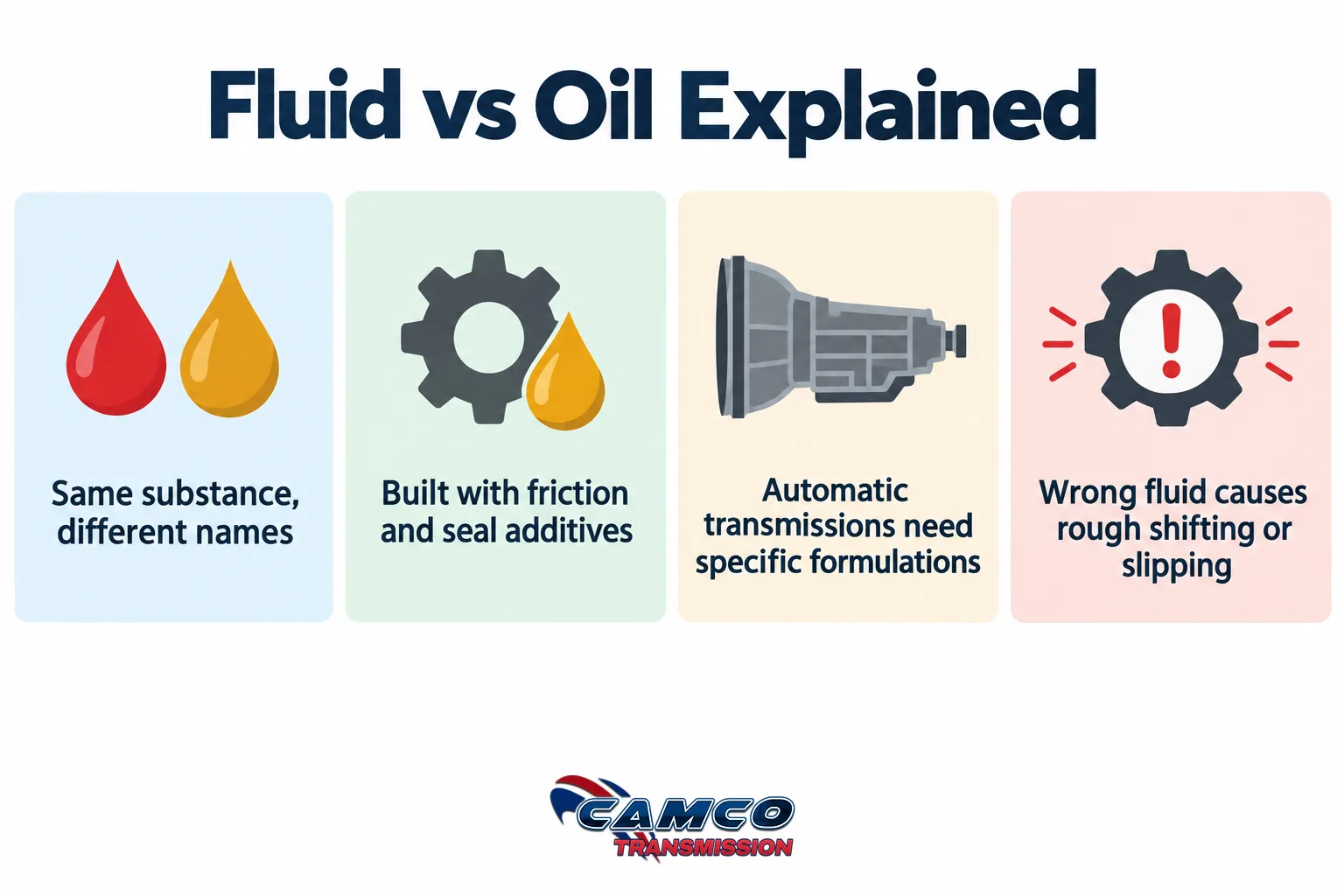
What matters more than the name is the type. Automatic transmissions call for specific fluid formulations, and the wrong one can cause rough shifting, slipping, or real damage. Whoever services your transmission should confirm the correct fluid spec for your make and model before doing a change or a flush.
Should I ever get a transmission flush?
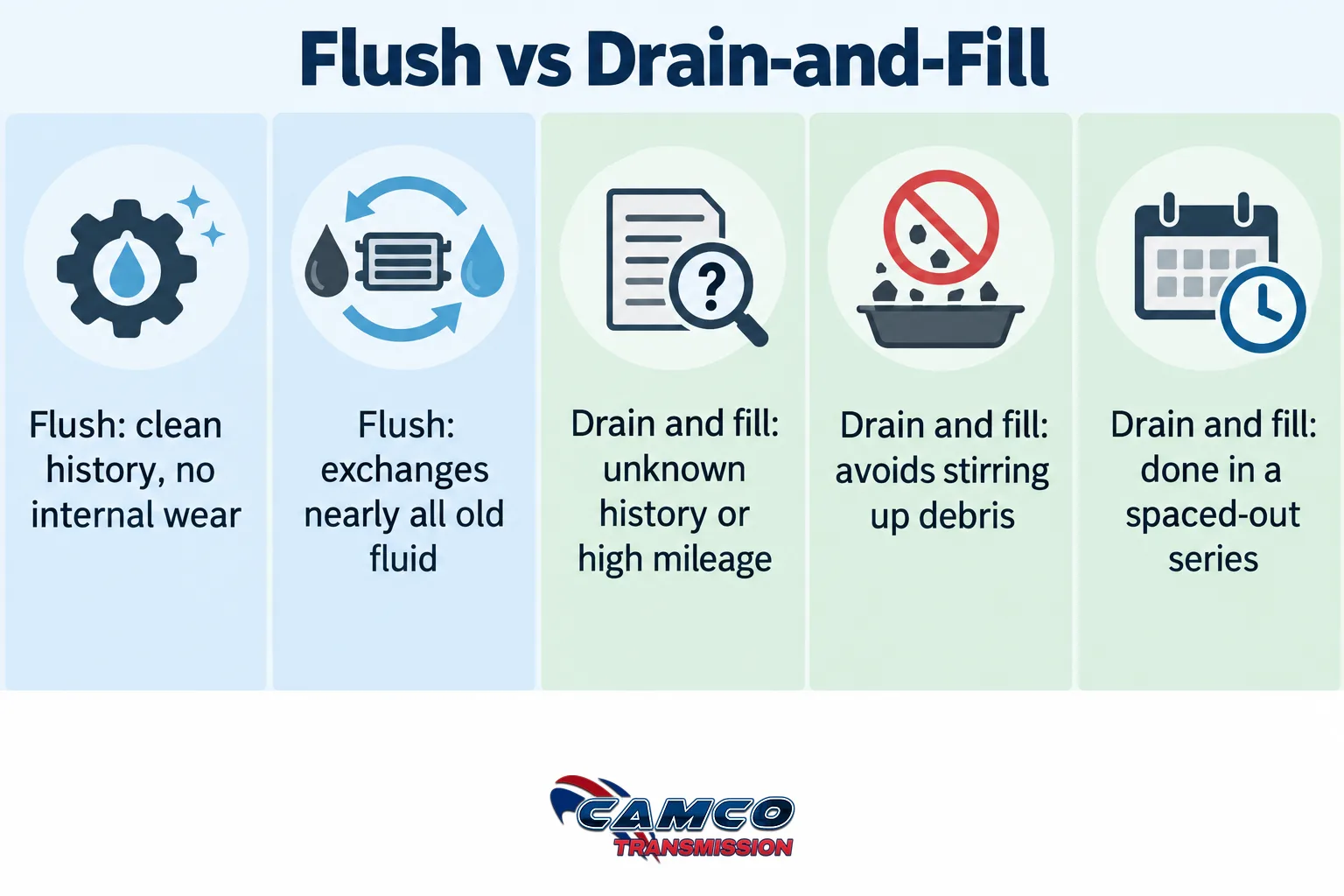
Yes, but only if your transmission has a clean maintenance history and no signs of internal wear. A flush works well on a transmission that's been serviced on schedule, where the fluid is still reasonably clean and the parts inside aren't shedding metal or clutch material. On a transmission in that shape, a flush gets more old fluid out and more new fluid in, which stretches the life of the unit.
Is it better to do a drain and fill for transmission or a flush?
For a transmission with unknown history, high mileage, or fluid that already looks dark and smells burnt, a drain and fill is the safer call almost every time. Old fluid often carries fine debris from worn clutches and gears. A flush's pressure can knock that debris loose and push it into narrow passages or the valve body, where it causes sticking or slipping that wasn't there before. A series of drain-and-fills, spaced a few months apart, cleans the fluid up gradually without that risk.
How do I check the fluid level?
Check it with the engine warm and running, using the dipstick if your car has one, or by having a shop check the fill plug if it doesn't. Plenty of newer vehicles skip the dipstick entirely, which means checking the level takes a lift and the correct fill plug procedure. If your car still has one, here's the basic process.
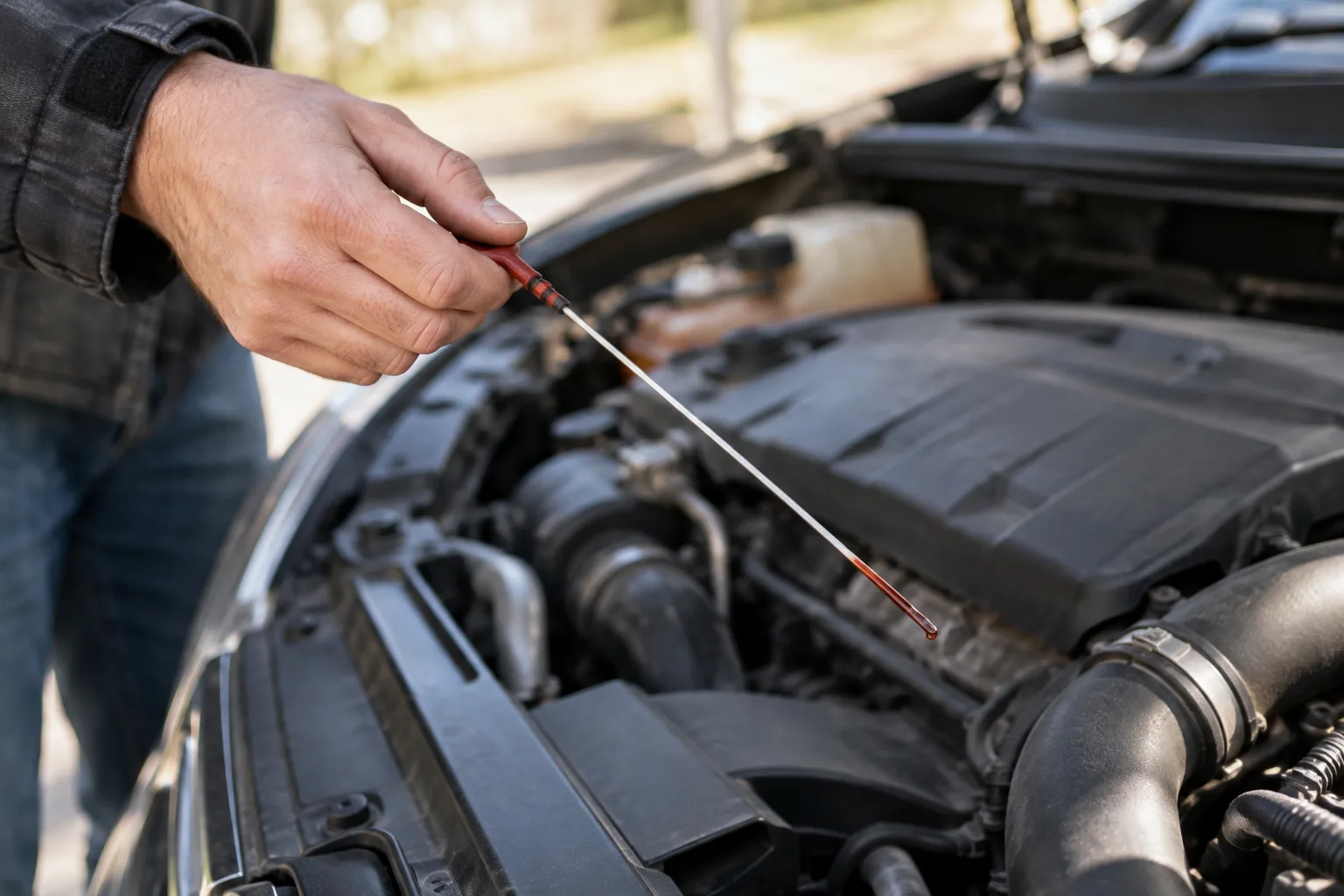
- Warm the car up. Drive it a few miles or let it idle until it reaches normal operating temperature, since fluid expands when hot and the reading will be off cold.
- Park on level ground and leave it running. Most automatic transmissions are checked in Park with the engine on, but confirm this in your owner's manual since it varies by model.
- Pull the dipstick and check the color and level. Fresh fluid is usually red or pink and close to clear. Dark brown, black, or fluid with a burnt smell signals it's overdue for service.
- Wipe it clean and reinsert fully before reading. A quick wipe and second check gives a more accurate level than reading it wet the first time.
Low fluid means a leak somewhere, and that needs attention before you worry about a change or flush. Red fluid spots under the car are a clear sign something needs looking at, covered in more detail in red fluid under your car: transmission leaks explained.
What is the biggest killer of transmissions?
Old, degraded fluid combined with heat is the fastest way to wear a transmission out. Fluid does three jobs at once: lubricates moving parts, operates the clutches that control shifting, and carries heat away from the unit. As it ages, it loses ground on all three, and the transmission starts running hotter and wearing faster, even if nothing else about the car has changed.
Las Vegas heat makes it worse. High ambient temperatures push transmission fluid temperatures up further still, especially in stop-and-go Strip traffic or towing conditions, and heat is what breaks fluid down fastest. Keeping fluid fresh on a regular schedule is one of the simplest ways to head off the kind of wear that ends in slipping, rough shifts, or a full rebuild.
Get Your Transmission Fluid Checked the Right Way
Guessing between a flush and a fluid change is a bad bet, especially if you don't know the full service history on your car. CAMCO Transmission offers transmission diagnostics, fluid service, and full rebuilds for foreign and domestic vehicles across Las Vegas, backed by a 12,000-mile or one-year warranty on full rebuilds, with a 24,000-mile or two-year upgrade available. Twenty-plus years in the valley and BBB A+ accreditation mean the recommendation you get is based on what's actually happening inside your transmission, not a one-size-fits-all service menu.
If your fluid looks questionable or you're not sure which service fits your car, start with a transmission diagnostic check and find out exactly what it needs before you spend a dime on the wrong fix.
Frequently Asked Questions
Should I ever get a transmission flush?
Yes, if your transmission has a clean service history and no signs of internal wear, since a flush replaces more old fluid in one visit than a standard change. On a high-mileage or long-neglected transmission, a drain and fill approach is usually safer because it avoids stirring up debris that a flush's pressure can dislodge.
How do I check the fluid level?
Warm the car up, park on level ground, and check the dipstick with the engine running in Park, if your vehicle has one. Many newer vehicles don't have a dipstick and need the fill plug checked on a lift instead, so check your owner's manual first.
What is the biggest killer of transmissions?
Old fluid combined with heat causes the fastest wear, since degraded fluid can't lubricate, operate the clutches, or carry away heat as well as fresh fluid. Las Vegas heat accelerates this breakdown, making regular fluid service one of the most effective ways to avoid early transmission failure.
What is the difference between transmission fluid and transmission oil?
They're the same liquid, just called different things out of habit. Transmission fluid is formulated specifically for friction, seals, and heat resistance in a transmission, and shouldn't be confused with or replaced by engine oil.
How often should transmission fluid be changed?
Intervals vary by make, model, and driving conditions, so the manufacturer's recommended schedule in your owner's manual is the best starting point. Vehicles driven in heavy heat, stop-and-go traffic, or used for towing typically need more frequent service than the standard interval.
Can a transmission flush cause damage?
On a transmission with old or dark fluid and unknown maintenance history, yes, since the pressure of a flush can dislodge debris and push it into tight passages. That's why a drain and fill, sometimes repeated over a few visits, is often the safer choice for a transmission in that condition.
More articles
- Signs of a Bad Transmission Solenoid
- Transmission Noise When Accelerating: Whining, Humming or Grinding
- Truck and Van Transmission Repair in Las Vegas
- Transmission Repair Near the Las Vegas Strip for Locals and Workers
- Torque Converter Problems: Signs, Causes and Repair Options
- Car Shifting Hard? What Hard Shifts Mean for Your Transmission