Transmission Overheating in Las Vegas Heat: Causes & Fixes
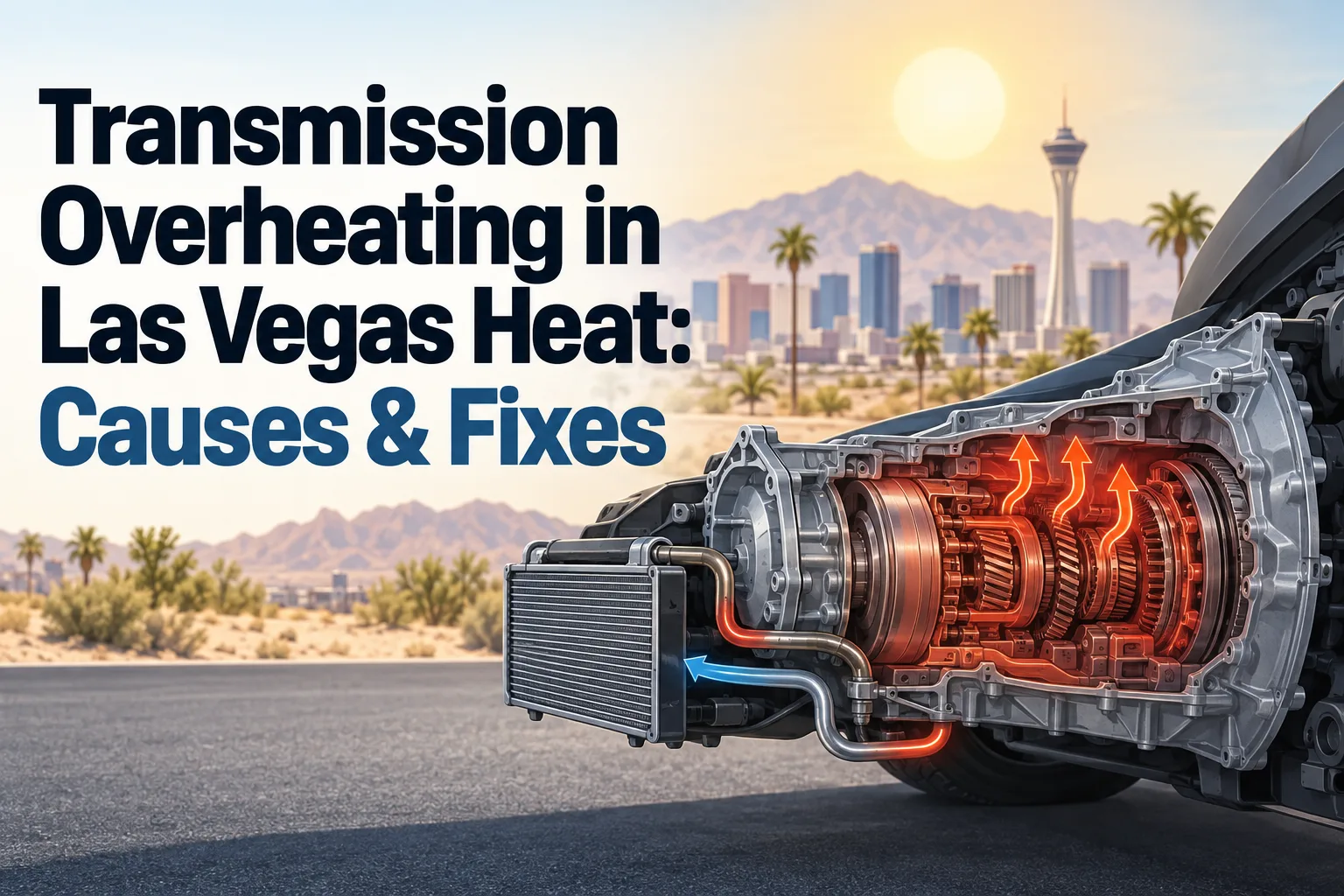
Transmission overheating happens when the fluid in your transmission gets hotter than it's built to run, usually past 250 degrees, and starts breaking down instead of doing its job. Once that happens, it stops protecting the moving parts inside, and friction takes over from there. Pavement in Las Vegas can run well past the air temperature on a June afternoon, so this is not some rare, freak problem. It's a normal-summer problem.
If your transmission has felt sluggish, slipped between gears, or thrown a warning light after sitting in Strip traffic, overheating is one of the first things worth ruling out. Most of the causes are mechanical and fixable. Catching the problem early is almost always cheaper than waiting it out.
Here's why it happens, what it feels like behind the wheel, and what to do first.
Key Takeaways
- Transmission fluid breaks down once it runs too hot, which is why overheating causes slipping, rough shifts, and eventually internal damage.
- Stop-and-go traffic, towing, and extreme ambient heat are the three most common triggers for overheating in Las Vegas.
- A burnt smell, delayed or slipping shifts, or a transmission warning light are signs to pull over and let the vehicle cool, not push through.
- Low or degraded fluid is behind most overheating cases, and a proper transmission diagnostic can confirm it before you spend money guessing.
- Letting an overheated transmission run for too long turns a fluid problem into a rebuild, so acting early matters.
Table of Contents
What causes transmission overheating in Las Vegas?
Transmission overheating usually comes down to fluid that's too low, too old, or working too hard for too long. The fluid does three jobs at once: it lubricates moving parts, carries away heat, and applies pressure to shift gears. Short it on any of those, whether there isn't enough of it or it's broken down from age, and it can't keep up. Temperatures climb fast once that happens.
Does Las Vegas weather make it worse?
Yes. Ambient air over 100 degrees means the transmission starts every drive from a hotter baseline, which leaves less room before fluid temperature crosses into damaging territory. Stop-and-go traffic near the Strip or on I-15 piles onto that, since idling and crawling don't push enough air through the cooling system to offset the heat being made.
Does towing or hauling add to the risk?
It does. Towing a trailer, hauling a loaded truck bed, or running a full fleet vehicle all make the transmission work harder to cover the same distance, and that means more heat per mile. Add a Las Vegas summer on top of that, and the margin for error gets thin fast.
What are the signs of an overheating transmission?
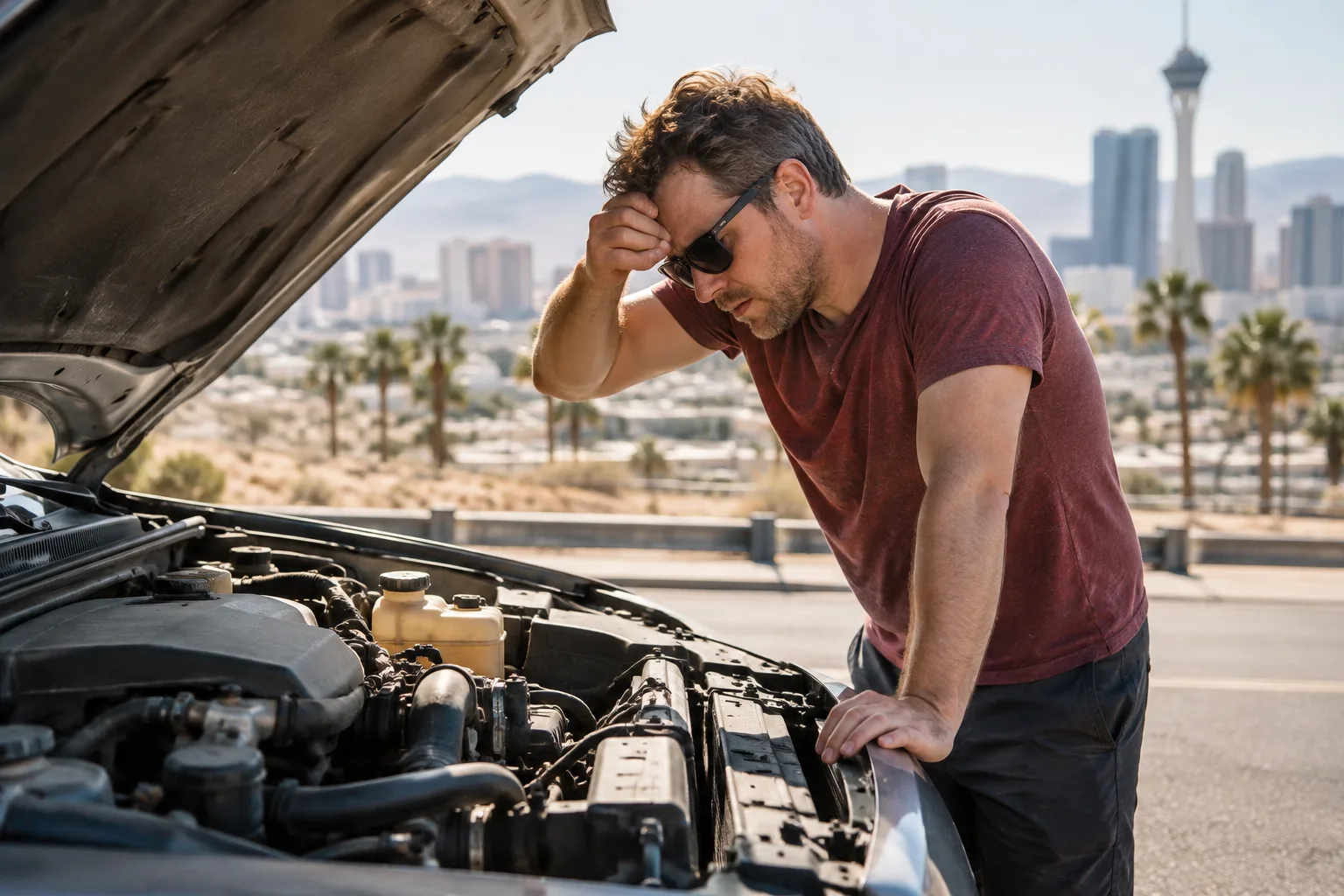
The most common signs are slipping gears, delayed shifts, a burnt smell, and a dashboard warning light. Overheated fluid thins out and loses its grip on pressure, so instead of shifting cleanly, the transmission starts to slip or hesitate between gears.
What does a slipping transmission feel like?
It can feel like the engine revs up without the car picking up speed to match, or like there's a short delay before the vehicle responds to the gas. If that's what you're noticing, it's worth reading through what transmission slipping actually means and what to check first.
Is a burnt smell always a transmission issue?
Not always, but don't ignore it. A sharp, burnt odor after driving, especially paired with sluggish shifting, points strongly toward overheated transmission fluid rather than engine oil or brakes, which smell different.
What should I do if my transmission overheats?
Pull over safely, let the vehicle idle or cool, and avoid driving further until you know why it happened. Keep driving on overheated fluid and you speed up the damage to clutches, seals, and gears inside the transmission. What started as a fluid problem becomes a mechanical one.
- Pull over when it's safe. Find a safe spot off the road, especially if you notice a warning light, burnt smell, or shifting that feels off.
- Put the vehicle in park or neutral and let it idle. This lets the cooling system work without the added load of driving, and gives fluid temperature a chance to drop.
- Check the fluid level and condition once the engine is off and cool. Low or dark, burnt-smelling fluid points toward the cause; clean, full fluid points toward a cooling system issue instead.
- Avoid continuing to drive if symptoms persist. Have the vehicle towed or driven gently and briefly to a shop rather than pushing through traffic on a transmission that's already struggling.
- Get a proper diagnostic before any repair. A diagnostic check identifies whether the issue is fluid, a failing cooler, or something further along, so you're not paying to fix the wrong thing.
How can I prevent transmission overheating?
Regular fluid checks, timely fluid changes, and paying attention to how your vehicle shifts are the best defense. Most overheating problems build up slowly, so there's usually a window to catch low or degraded fluid before it does real damage.
Does an external transmission cooler help?
For vehicles that tow regularly or run as part of a fleet, an auxiliary transmission cooler can give the system more capacity to shed heat before it piles up. It's a fair question to raise at a service visit if towing or heavy local driving is a regular part of how the vehicle gets used.
Keep Your Transmission Running Cool This Summer
CAMCO Transmission is a Las Vegas repair shop with BBB A+ accreditation and ATRA membership, and more than 20 years of experience working on both foreign and domestic vehicles. The shop offers transmission diagnostics, transmission repair and rebuilds, engine repair, tune-ups, brake service, and fleet maintenance, all explained in plain English before any work starts.
Every full rebuild comes backed by a 12,000-mile or one-year warranty, with a 24,000-mile or two-year upgrade available for drivers who want extra coverage. If your transmission has been running hot, slipping, or just not shifting the way it used to, get it looked at before the heat finishes the job.
You can start with a transmission repair appointment in Las Vegas or check current savings on the transmission repair coupon page before booking.
Frequently Asked Questions
What temperature is too hot for a transmission?
Most automatic transmission fluid starts to break down once it consistently runs above 250 degrees Fahrenheit. Past that point, fluid loses its ability to lubricate and apply pressure correctly, which leads to slipping and accelerated wear.
Can low transmission fluid cause overheating?
Yes, low fluid is one of the most common causes. With less fluid to absorb and carry away heat, the system has far less buffer before temperatures climb into damaging territory.
Is it safe to keep driving with an overheating transmission?
It's not a good idea. Continuing to drive lets fluid keep degrading and lets heat chew through clutches, seals, and gears, which can turn a simple fluid fix into a full rebuild.
How often should transmission fluid be checked in hot climates?
In a climate like Las Vegas, checking fluid level and condition at every oil change is a reasonable habit, since heat accelerates fluid breakdown faster than it would in a milder climate. A technician can confirm the right interval for your specific vehicle.
Does idling in traffic cause transmission overheating?
It can contribute. Idling and slow stop-and-go driving don't move much air through the radiator and transmission cooler, so heat builds up faster than it's carried away, especially on the hottest days.
More articles
- Signs of a Bad Transmission Solenoid
- Transmission Noise When Accelerating: Whining, Humming or Grinding
- Truck and Van Transmission Repair in Las Vegas
- Transmission Repair Near the Las Vegas Strip for Locals and Workers
- Torque Converter Problems: Signs, Causes and Repair Options
- Car Shifting Hard? What Hard Shifts Mean for Your Transmission