Transmission Warning Light: What It Means and What to Do
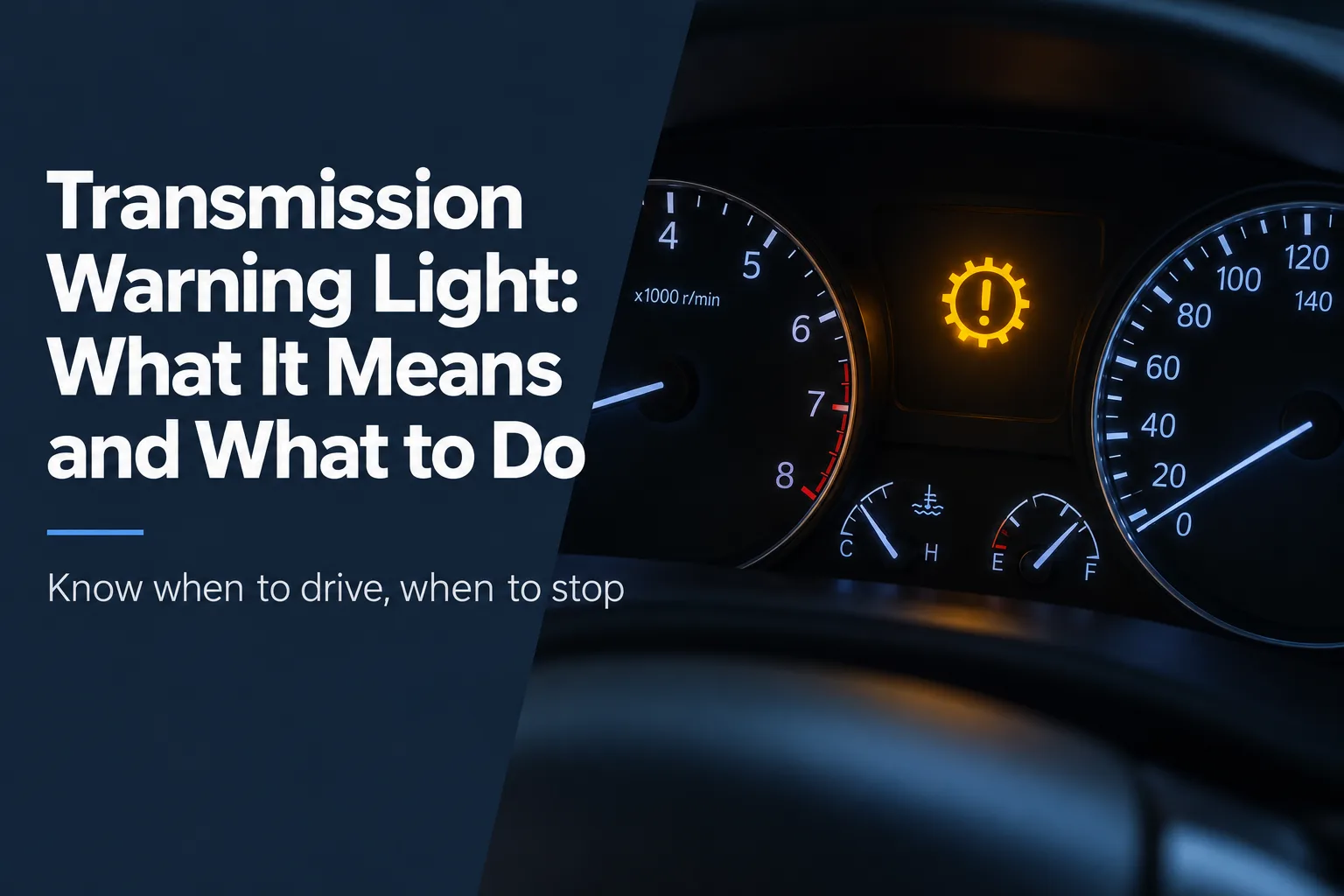
That little light on your dash means the computer caught something off in how your transmission shifts, builds pressure, or handles heat. It's not the same as a generic check-engine light, and it's not something to shrug off until payday. The light exists to flag a problem while it's still small and still cheap to fix.
Las Vegas doesn't make this easier. Stop-and-go traffic on the Strip, long idles in casino valet lines, and triple-digit summer heat all pile extra strain on a transmission. When that light comes on here, treat it like it matters — because it usually does.
Here's what the light typically means, what causes it, whether you can keep driving, and roughly what repairs run.
Key Takeaways
- A transmission warning light points to a shifting, pressure, or temperature problem the computer has already detected.
- Driving short distances at low speed is usually safer than a freeway commute once the light is on.
- Low or degraded fluid is the most common trigger, but it's not the only one.
- Get a proper transmission diagnostic before assuming the worst.
- Cost to fix ranges widely depending on whether it's a sensor, a fluid issue, or internal wear.
Table of Contents
Can I drive my car if the transmission light is on?
You can usually drive carefully for a short distance, but don't treat it as business as usual. A steady, non-flashing light means the computer has logged an issue but the transmission is still working. A flashing light is a different story — it often means the transmission has dropped into a protective "limp mode" to avoid damage, and pushing through normal driving can make things worse fast.
What's the difference between a steady light and a flashing one?
A steady light is a warning. A flashing one is closer to an alarm — the system has found a fault serious enough that it's deliberately limiting how the car shifts. If yours is flashing, keep speeds low, stay off the highway, and get it looked at as soon as you can.
Should I keep driving to work or home first?
Getting home or to a safe stopping point at low speed is usually fine. Grinding across town in rush-hour traffic on I-15 with the light on is not a great idea, especially in summer heat, when the transmission is already fighting to stay cool.
What would cause the transmission light to come on?
The most common causes are low or worn-out fluid, a failing sensor, or early internal wear. The transmission control module watches dozens of signals at once — fluid temperature, gear position, shift timing, pressure — and lights the warning the moment something drifts outside its normal range.
Is it always a transmission problem?
Not always. Sometimes it's a sensor throwing a false reading, or a connector that worked loose. But you can't tell the difference by ear or by how the car feels — that's what a scan tool and a technician are for. Reading the actual fault code is the only honest starting point, covered in more detail on how a check-engine light connects to the transmission.
Can low fluid alone trigger it?
Yes. Transmission fluid does two jobs: it lubricates moving parts, and it carries the hydraulic pressure that controls shifting. Let it run low, whether from a leak or from skipping a change, and pressure drops — the computer notices before you ever feel a rough shift.
How much does it cost to fix a transmission?
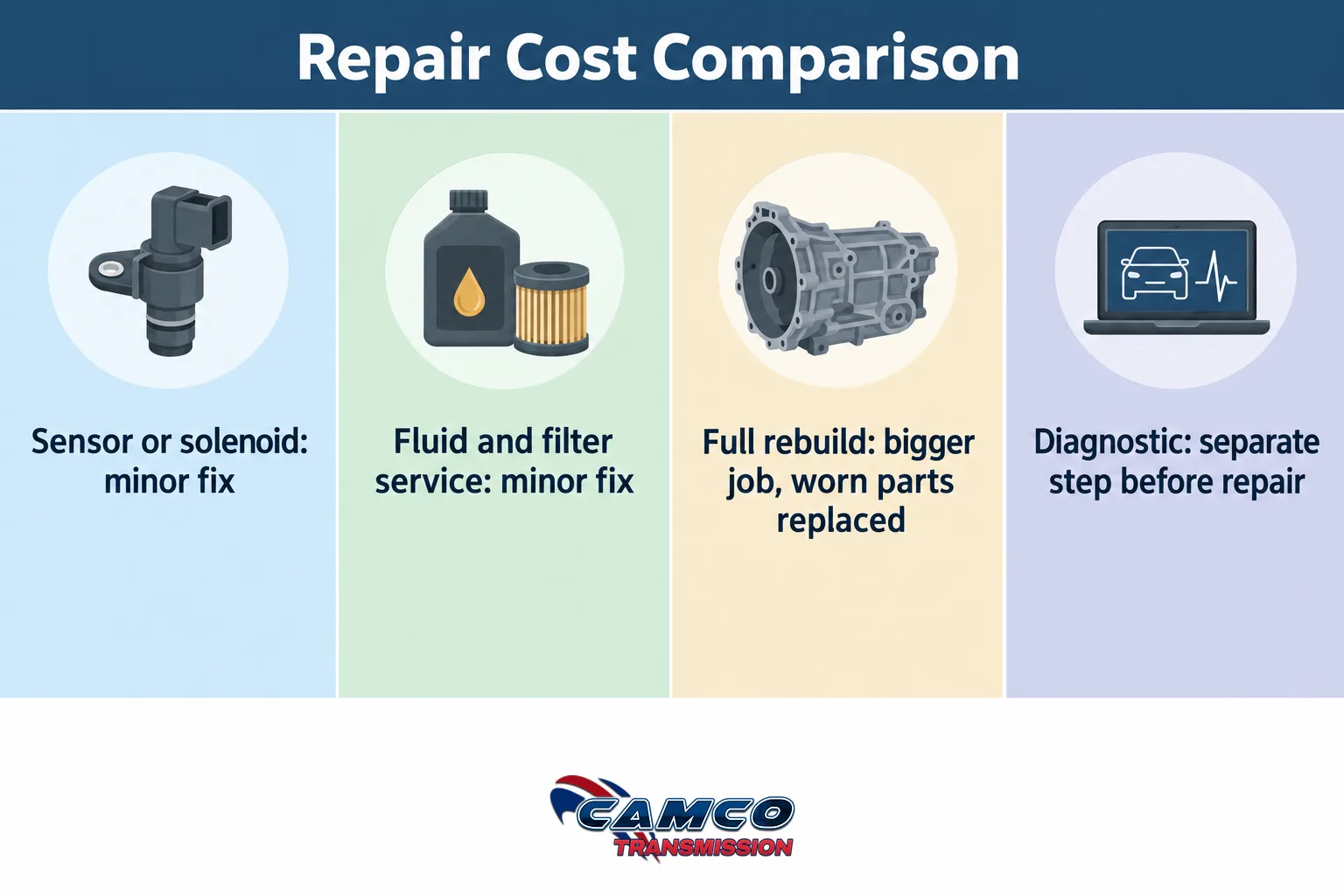
Cost depends entirely on what's actually wrong — a sensor or fluid issue can be a minor repair, while internal wear usually means a rebuild. There's no honest single number that fits every car. A 2012 sedan and a 2020 pickup don't share parts, labor time, or failure points, so anyone quoting a flat price before looking under the car is guessing.
What's the general range I should expect?
Smaller fixes — a sensor, a solenoid, a fluid and filter service — run far less than a full rebuild. A rebuild costs more because it's a bigger job: the transmission comes apart, worn internal parts get replaced, and it goes back together to spec. For a breakdown of what drives that cost, see how a transmission rebuild is priced in Las Vegas.
Does getting it diagnosed cost extra?
A proper diagnostic is a separate, smaller step before any repair decision gets made, and it's the only way to know which end of the cost range you're actually in. Skip it and guess, and it usually costs more down the road.
What are the top signs of transmission problems?
Beyond the warning light itself, watch for slipping, delayed engagement, rough shifts, unusual noise, and fluid leaks. They tend to show up around the same time as the light, sometimes a little before it.
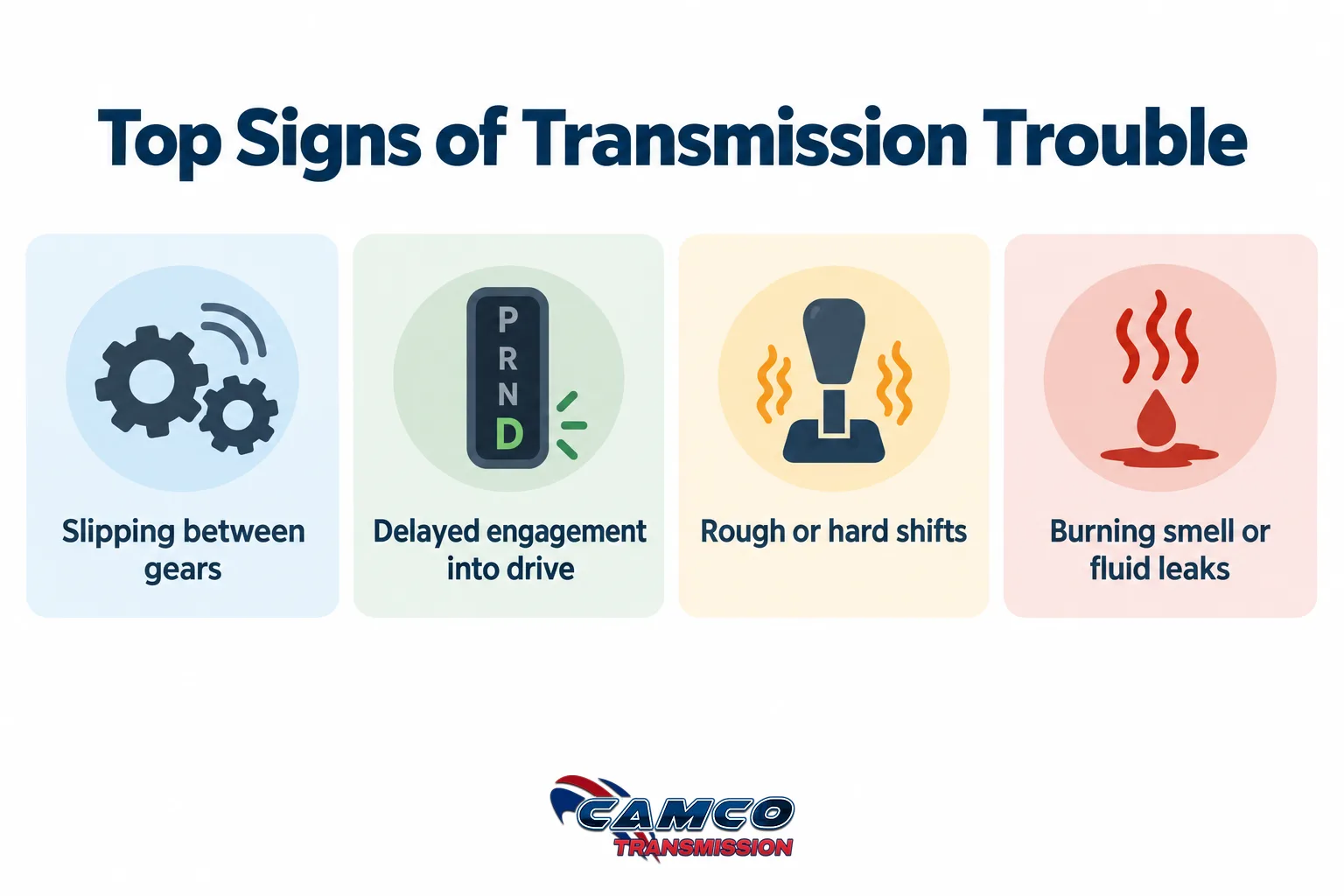
- Slipping between gears. The engine revs up but the car doesn't accelerate the way it should.
- Delayed engagement. A pause after shifting into drive or reverse before the car actually moves.
- Rough or hard shifts. Gear changes that jerk or bang instead of flowing smoothly.
- Burning smell or unusual noise. Often a sign the fluid is overheating or breaking down.
- Fluid spots under the car. A leak means falling fluid levels and rising pressure problems over time.
See more than one of these alongside the warning light, and it's worth getting looked at soon rather than waiting for things to get worse. A longer list of early warning signs is covered in what slipping actually feels like behind the wheel.
Get Your Transmission Light Checked Properly
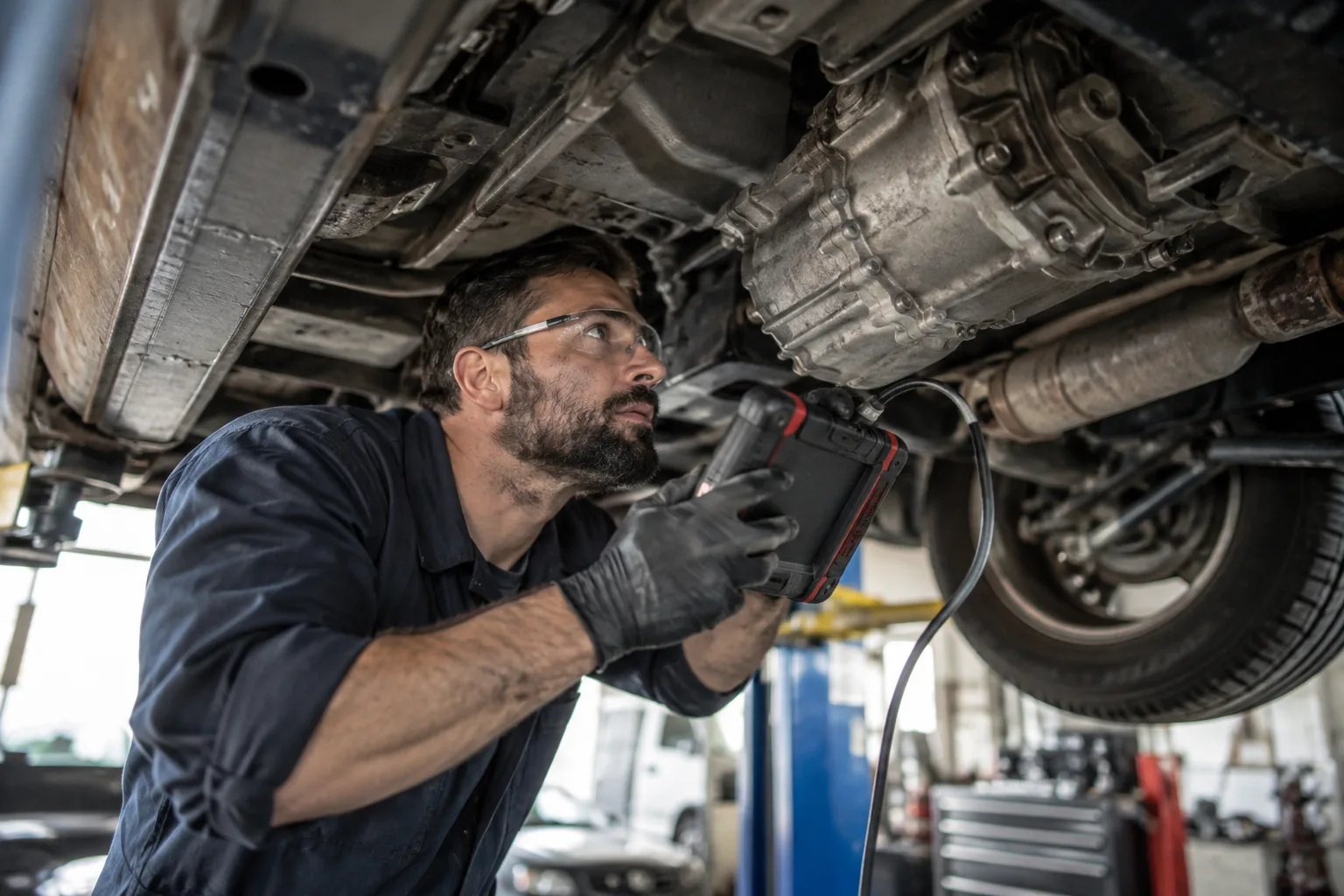
CAMCO Transmission sits just east of The Orleans Hotel & Casino on Wynn Road, and works on both foreign and domestic vehicles for drivers across the Las Vegas valley. The shop runs an honest diagnosis in plain English — no guessing, no jargon — and backs full rebuilds with a 12,000-mile or 1-year warranty, with a 24,000-mile or 2-year upgrade available. With 20-plus years in the trade, BBB A+ accreditation, and ATRA membership, the goal stays simple: find out what the light actually means before anyone spends a dollar on repairs.
If that light just came on, don't wait around for it to start flashing. Spanish-speaking service is available for customers who'd rather talk through the problem in their own language.
Start with a straightforward transmission diagnostic to find out exactly what triggered the light, or check current savings on the transmission repair coupon page before booking.
Frequently Asked Questions
Is a transmission warning light the same as a check-engine light?
No. A check-engine light can cover dozens of systems across the vehicle, while a dedicated transmission warning light points specifically to the transmission control module detecting a fault in shifting, pressure, or temperature.
Will the transmission light turn off on its own?
Sometimes, if the triggering condition was temporary, like a brief sensor glitch. But it can also come back on under the same conditions, and ignoring it doesn't fix whatever caused it in the first place.
Can a dead battery or electrical issue cause a false transmission light?
Yes, a weak battery or loose connector can sometimes send bad signals to the transmission control module, triggering the light without an actual mechanical problem. A scan tool reading the fault code is the only way to tell the difference.
Is it safe to ignore a flashing transmission light?
No. A flashing light usually means the transmission has entered a protective mode to limit damage, and continuing to drive normally can turn a repairable issue into a much bigger one.
Does Las Vegas heat make transmission warning lights more common?
Heat adds stress to the fluid and internal components, so transmissions here can show warning signs sooner than in cooler climates, especially if fluid service has been skipped.
More articles
- Signs of a Bad Transmission Solenoid
- Transmission Noise When Accelerating: Whining, Humming or Grinding
- Truck and Van Transmission Repair in Las Vegas
- Transmission Repair Near the Las Vegas Strip for Locals and Workers
- Torque Converter Problems: Signs, Causes and Repair Options
- Car Shifting Hard? What Hard Shifts Mean for Your Transmission